





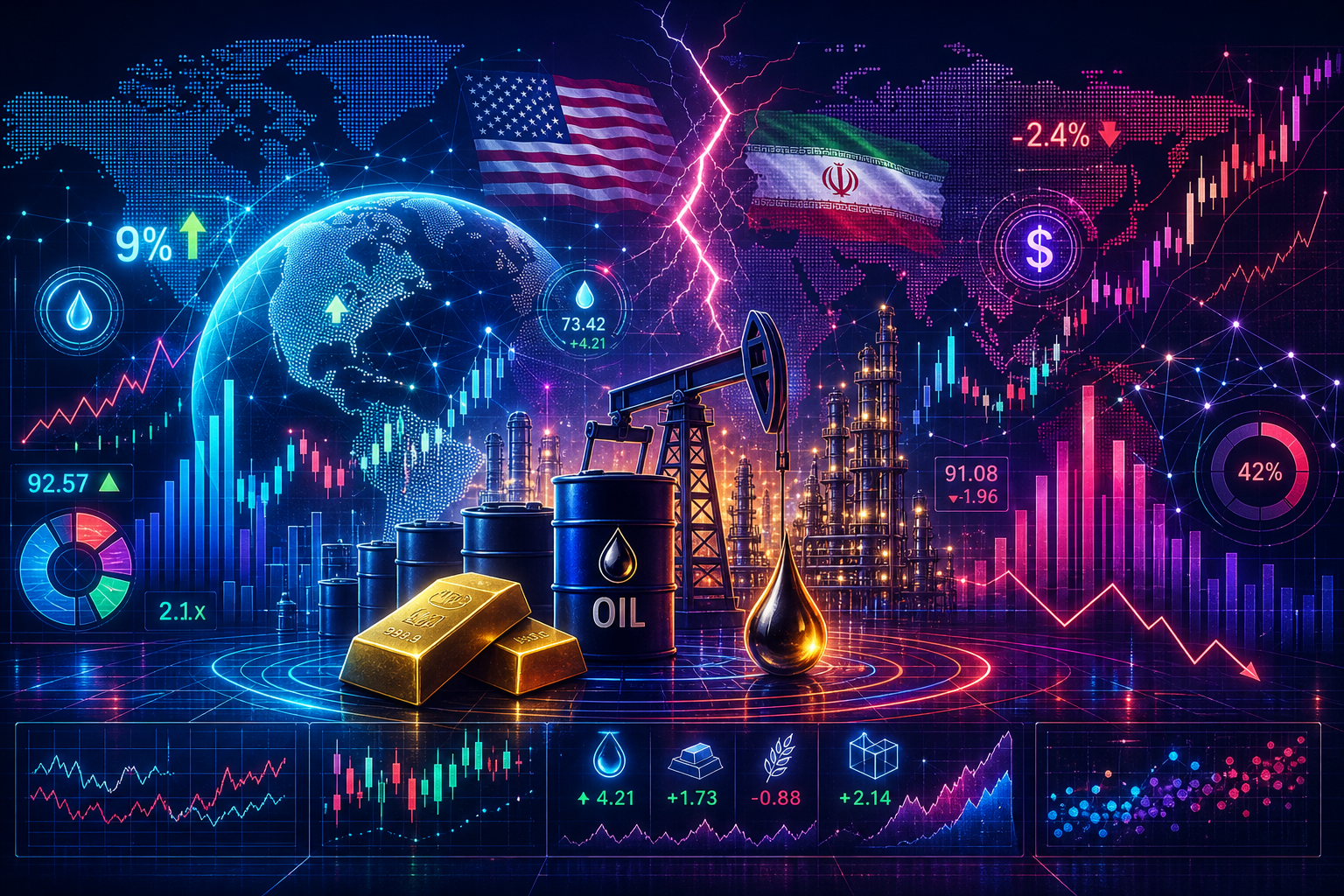
The Current Landscape: U.S.-Iran Relations and Oil Prices
The geopolitical landscape between the United States and Iran remains fraught with tension, having immediate repercussions on global oil prices and stock markets. As negotiations over a potential peace deal reach a stalemate, the Strait of Hormuz — a vital artery for the global oil supply — has become a focal point of contention. Recent developments have pushed Brent crude prices to around $88 a barrel, marking a notable 5% increase over just two days. This situation is not merely a passing storm; it signifies deeper complexities that could shape the future of energy markets and investor sentiment.
Historical Context: The U.S.-Iran Standoff
The U.S.-Iran conflict has historical roots tracing back to the 1979 Iranian Revolution, which saw the overthrow of the U.S.-backed Shah and the establishment of the Islamic Republic. The U.S. and Iran have been at odds ever since, particularly after the U.S. withdrew from the Joint Comprehensive Plan of Action (JCPOA) in 2018, leading to renewed sanctions against Iran. These sanctions have significantly impacted Iran's oil exports, which in turn affects global supply and prices.
In the recent escalation, President Donald Trump has made demands regarding compensation for loss of life during various conflicts involving Iran, complicating diplomatic efforts. Analysts suggest that this situation resembles a "Mexican standoff," where both parties are reluctant to make concessions, leading to prolonged uncertainty in global oil markets.
Oil Prices: Analyzing the Recent Surge
As oil prices climb to their highest levels since late July, market analysts are closely monitoring the situation. Tony Sycamore, a market analyst at IG, described the current state of affairs as a “war of attrition,” where oil prices may stabilize between $75 and $95 while the U.S. and Iran negotiate. This price range reflects not just the immediate impact of geopolitical tensions but also broader economic implications.
The rise in oil prices has been accompanied by widespread concerns over inflation. Energy costs are a key driver of overall inflation, and any increases can heavily influence consumer spending, economic growth, and monetary policy decisions.
The Broader Economic Implications
Inflation Fears Loom
With oil prices continuing to rise, the anticipation surrounding the upcoming U.S. consumer price report is palpable. Economists predict that the report may not capture the most recent surge in energy costs, but it could still influence expectations for the Federal Reserve's interest rate decisions. Current market sentiment indicates a 50/50 chance of a rate hike, which would suggest a more hawkish stance from the central bank.
Jonas Goltermann, chief markets economist at Capital Economics, has noted that the risks are skewed towards a "hot print," which could rekindle worries about stagflation — a scenario where inflation rises alongside stagnant economic growth. Such an environment poses challenges for both consumers and investors and could lead to a reevaluation of asset allocations.
Impact on Global Stock Markets
The ripple effects of rising oil prices are evident across global stock markets, with European indices such as the STOXX 600 experiencing fluctuations. The index drifted in early trading but remained near record highs, indicating that investor sentiment is still somewhat resilient despite the geopolitical tension.
In the U.S., the benchmark indexes fell on Monday, reflecting investor apprehension. Nasdaq futures rose slightly, indicating a mixed outlook amidst ongoing volatility. This inconsistency highlights the delicate balance investors must navigate while considering their exposure to different asset classes amidst geopolitical uncertainties.
Corporate Developments: Nvidia and Intel
Compounding the market dynamics, Nvidia announced a collaboration with six major financial institutions, including BlackRock and Goldman Sachs, to create a funding framework exceeding $500 billion for AI infrastructure. While the details of this arrangement remain sparse, it raises questions about potential risks similar to those seen during the subprime mortgage crisis.
Nvidia's bond yields have surged as investors express concern over rising interest rates, with its 2% bond maturing in 2031 yielding around 4.887%. This sell-off further illustrates the interconnectedness of geopolitical tensions, energy prices, and corporate financial health.
In contrast, Intel's recent decision to raise $20 billion through a stock offering for the first time since its 1971 listing signifies a strategic pivot. The move has been well-received, with Intel shares seeing an uptick in European markets, suggesting that some investors remain optimistic about specific sectors, particularly the technology space.
Currency Markets: The Yen and Australian Dollar
Amidst these developments, currency markets are also feeling the strain. The Japanese yen has weakened beyond 159 against the dollar, continuing a trend that has raised concerns about possible interventions. A holiday in Japan contributed to thinner trading volumes, which often amplify price movements.
The Reserve Bank of Australia (RBA) held its cash rate steady at 4.35% for the second consecutive meeting, indicating a cautious approach to inflation control. However, the RBA hinted at potential hikes if necessary, underscoring the global battle against rising prices and the impacts on currency valuations.
Gold: A Safe Haven?
Investors looking for stability amid volatility often turn to gold. This month alone, gold prices have risen by 8%, although recent trading showed a slight decline, landing at around $4,365 an ounce. The yellow metal's performance is closely tied to investor sentiment regarding inflation and economic stability, making it a critical barometer for market health.
Conclusion: Navigating Uncertainty
The ongoing standoff between the U.S. and Iran serves as a reminder of the intricate web of geopolitical relations that can influence global markets. As oil prices rise and stock markets react, investors must remain vigilant, considering both immediate impacts and longer-term implications.
With inflation concerns looming large and corporate strategies evolving in response to market conditions, a balanced perspective is crucial. Diversification and a keen eye on geopolitical developments will be essential for navigating the complexities of today's financial landscape. Investors should remain informed and ready to adapt to an ever-changing environment, where decisions made in Washington and Tehran can have ripple effects across the globe.








No comments yet. Be the first to share your thoughts!