




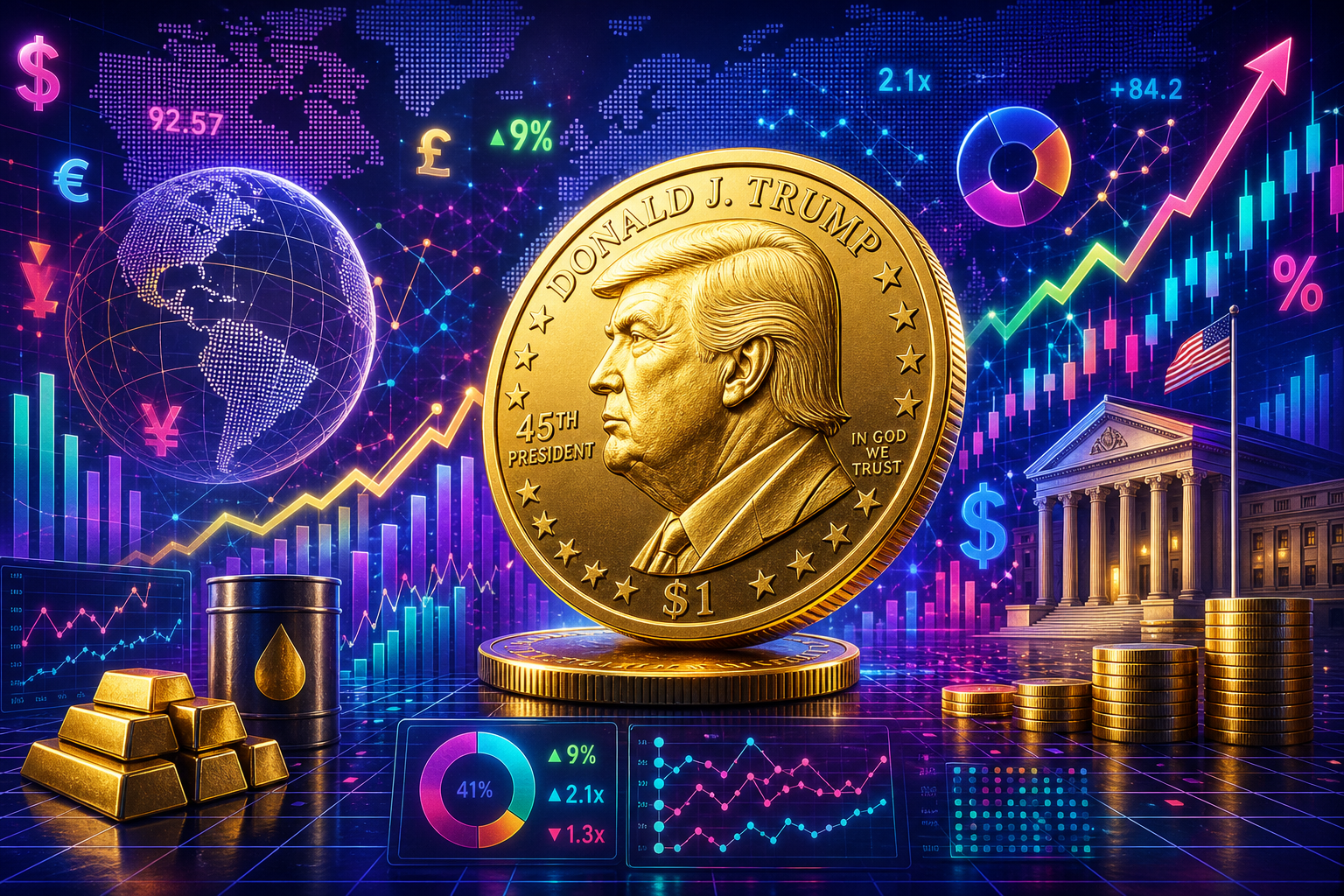
On July 19, 2023, the U.S. Mint made headlines by unveiling a series of commemorative $1 coins that feature the portrait of former President Donald J. Trump. While at first glance, these coins may seem like a quirky addition to the Mint’s offerings, their launch has ignited a whirlwind of discussion surrounding their pricing, legality, and the broader implications of commemorative currency in America.
The Launch of the Trump Coin
The release of the Trump coins coincides with the United States’ preparation for its 250th anniversary, known as the Semiquincentennial. This celebration serves as a reminder of the nation’s rich history and cultural heritage, making it a fitting occasion for the Mint to introduce special commemorative items. The coins are marketed for collectors, who are willing to pay a premium for a piece of political memorabilia.
Initially, the coins were sold in rolls or bags, priced at $61 for a roll of 25 coins and $154.50 for a bag of 100. At these prices, collectors paid between $1.55 and $2.44 per coin, significantly above the face value of $1. This markup is not unusual in the world of collectible coins, where rarity and sentimentality heavily influence value.
Interestingly, the coins sold out within hours of their release, rendering them “currently unavailable” on the Mint's website. The rapid sellout shows a robust demand among collectors and enthusiasts, but it also raises questions about the long-term value and significance of these pieces.
Composition and Design
Despite their gold-colored appearance, the Trump coins do not contain any real gold. Instead, they are primarily made of copper with small percentages of zinc, manganese, and nickel. The obverse side features Trump's face, while the reverse bears the presidential seal, both adorned with inscriptions commemorating the 250th anniversary of the United States.
The coins were designed to evoke a sense of nostalgia and celebration, aligning with the Mint’s goal to foster a connection to America's past. Yet, their design has drawn scrutiny regarding compliance with existing laws governing U.S. currency.
Legal Controversies and Historical Precedents
The launch of the Trump coin is not without its legal and ethical controversies. Historically, U.S. legislation has prohibited the depiction of living individuals on currency. A rule implemented in the 19th century was designed to maintain a separation between living figures and the honor of being featured on coins. Additionally, a 2005 law mandated that a former president could only be depicted on commemorative coins at least two years after their death.
However, Treasury officials argue that the Trump coin is permissible under a 2020 law that allows for designs “emblematic of the United States Semiquincentennial.” They maintain that the coin's release is in alignment with this legal framework, which permits certain exceptions for commemorative coins.
In response to the controversy, Donald Scarinci, a Democratic committee member overseeing coin designs, stated, “If they make it without our review, it will be illegal.” This underscores the tension between the U.S. Mint and congressional committees tasked with maintaining the integrity and historical accuracy of U.S. currency.
Historical Context of Commemorative Coins
The Mint has a long-standing tradition of releasing commemorative coins to mark significant events in American history. For instance, during the nation’s 150th anniversary, a commemorative half-dollar coin featuring Calvin Coolidge and George Washington was issued. However, most of these coins were returned to the Mint and subsequently melted down, indicating that not all commemorative releases find lasting appeal.
The Trump coin’s rapid sellout suggests a different trajectory. It is crucial to consider the socio-political landscape that has shaped its demand. The coin appeals not just as a collectible but also as a symbol of political allegiance, making it a sought-after item for many supporters of the former president.
Implications for Collectors and Investors
The explosive popularity of the Trump coins raises several implications for collectors and investors in the realm of commemorative currency.
-
Value Fluctuations: Investors may find that the value of these coins fluctuates significantly over time. Items that are initially released in limited quantities can appreciate in value, particularly if they become iconic or are associated with a particular historical or political moment.
-
Political Symbolism: Coins like these can transcend mere currency status and become symbols of political movements. This phenomenon has been observed throughout history, where commemorative items often take on meanings that reflect the socio-political climate of the era.
-
Market Trends: The rapid sellout of the Trump coins mirrors broader trends in the collectibles market, where limited-edition items gain traction among investors. The intersection of politics and collectible currency could signal a new trend in how political figures are memorialized.
The Future of Commemorative Currency
As the U.S. Mint continues to innovate with commemorative currency, the implications of these new designs will be closely monitored. The Trump coin may represent a pivotal moment in how the Mint navigates the complexities of legality, public sentiment, and market demand.
Moreover, as the nation prepares for its 250th birthday, one can expect an influx of additional commemorative items that reflect the multifaceted history of the United States. These coins will not only serve as collectibles but also as tangible pieces of the ongoing narrative of what it means to be American.
Conclusion: A New Era for Collectible Currency
The release of the gold-colored Trump coins by the U.S. Mint serves multiple purposes: celebrating a significant national milestone while also catering to a specific demographic of collectors. The legal controversies surrounding their issuance, combined with their immediate popularity, signal a unique intersection of politics and finance.
As collectors and investors alike assess the future value of these coins, they will also be engaging with broader questions about how currency can capture and reflect the zeitgeist of its time. In an increasingly polarized society, items like the Trump coin may serve as both a commemorative piece and a divisive symbol, underscoring the complex relationship between currency, politics, and cultural identity in contemporary America.
As we look ahead, the Mint’s future offerings will undoubtedly continue to spark conversations and debates, reflecting the ever-evolving narrative of the United States.








No comments yet. Be the first to share your thoughts!