





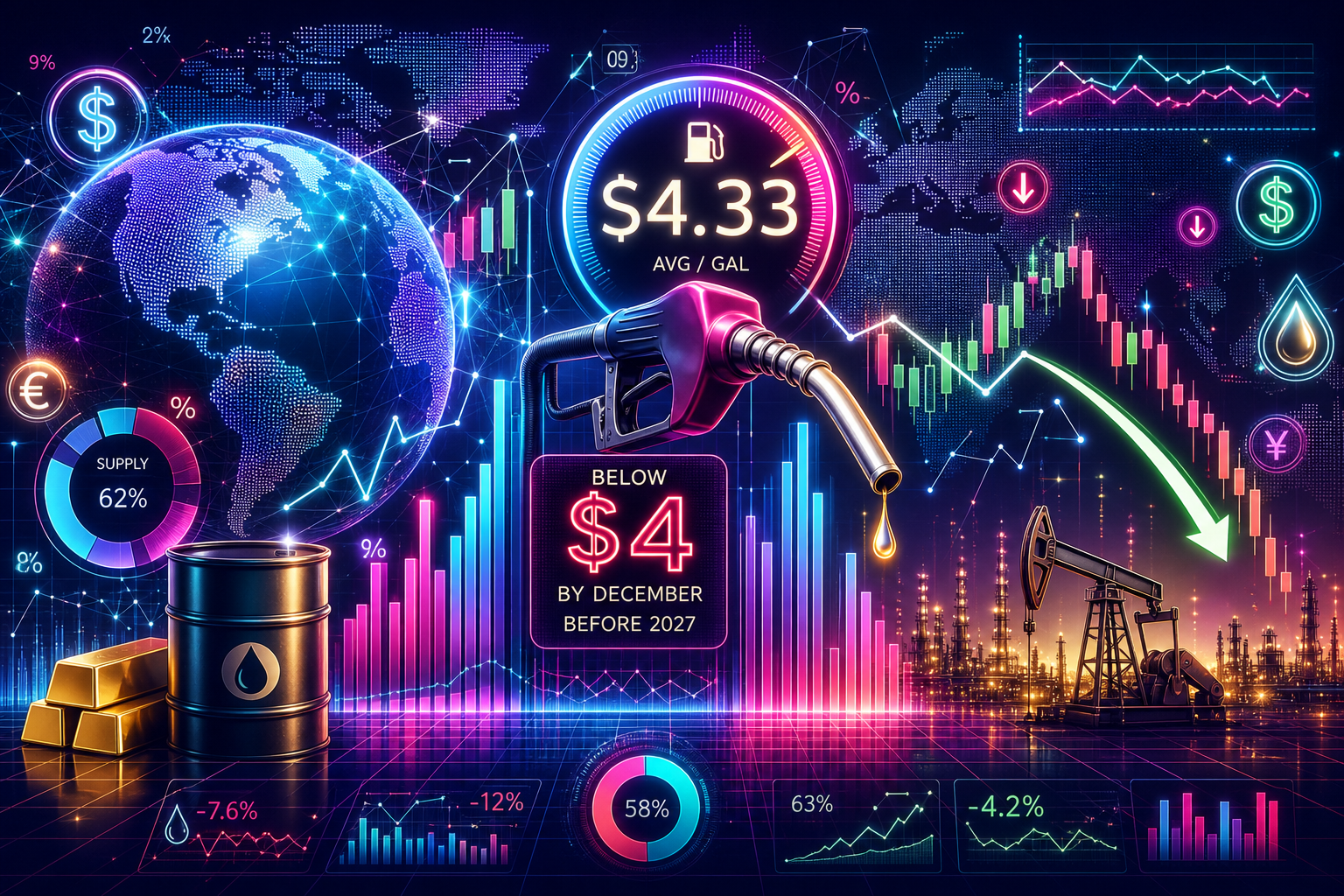
As summer fades and the winter season approaches, gas prices are on the minds of many American drivers. Currently, the national average for a gallon of regular gasoline stands at approximately $4.33, over a dollar higher than the previous year. However, recent forecasts from the U.S. Energy Information Administration (EIA) hint at a possible decline in prices, potentially dipping below $4 by December 2026. This article explores the factors behind these projections, the role of geopolitical tensions, and what consumers can realistically expect in the coming months.
Understanding the Current Gas Price Landscape
Historical Context
Historically, gas prices have shown significant volatility influenced by a range of factors, including crude oil prices, refinery output, seasonal demand, and geopolitical events. For instance, before the recent conflicts in the Middle East, the average price was a mere $2.98 per gallon. However, following the escalation of tensions, prices surged, peaking at $4.56 in May 2026, only to retreat slightly in June when a tentative agreement involving Iran was reached.
EIA's Forecast: A New Hope for Consumers?
The EIA's recent forecast suggests that gas prices could gradually decline over the next few months, aided by several critical factors:
-
Increased Refinery Production: After completing seasonal maintenance, refineries are expected to ramp up production. This increase is vital for meeting consumer demand, especially as winter approaches when gasoline consumption typically decreases.
-
Seasonal Demand Trends: Winter months often see lower demand for gasoline due to fewer road trips and colder weather conditions. This seasonal pattern could alleviate some pressure on prices, allowing inventories to recover and potentially pushing prices down.
Despite these optimistic signs, the EIA cautioned that its forecast is fraught with “above-average uncertainty.” The anticipated decline might not be as pronounced as hoped, especially due to ongoing geopolitical tensions and supply chain constraints that could keep prices elevated.
The Geopolitical Wild Card
The situation in the Middle East, particularly the ongoing conflict involving Iran, remains a significant variable in gas price predictions. Since the conflict began in February 2026, global oil shipments through the Strait of Hormuz, a crucial corridor for energy supplies, have been disrupted. These tensions create a precarious environment where even minor escalations can lead to sudden spikes in gas prices.
Tom Kloza, chief energy advisor at Gulf Oil, highlights this unpredictability. He estimates that the national average could hover around $4.11 by the end of December. Kloza's perspective indicates that while some relief is possible, the broader context of geopolitical instability makes any predictions tentative at best.
The Supply-Demand Equation
Tight Gasoline Supplies
One of the critical challenges facing the gas market is the tight supply of gasoline. The EIA's report noted that U.S. gasoline inventories are expected to remain constrained, which could limit the extent to which prices can decline. It’s essential to understand that while crude oil prices may drop, this does not guarantee immediate relief for consumers at the pump.
Factors influencing gasoline pricing include:
-
Refining Margins: The difference between the wholesale price of gasoline and the cost of crude oil is a critical indicator of the health of the refining sector. High refining margins suggest that even if crude prices fall, consumers may not see the same reduction at the pump due to the costs associated with refining and distribution.
-
Regional Price Variations: Gas prices can vary significantly across the United States, influenced by local taxes, transportation costs, and regional demand. Areas supplied by Gulf Coast refineries might see more substantial relief compared to Western states, where prices traditionally remain higher.
Seasonal Trends and Consumer Behavior
Historically, gasoline prices tend to reach their lowest levels during the winter months, particularly between mid-December and January. This seasonal drop occurs as demand decreases with the end of the holiday travel season and colder weather. While consumers may experience some relief during this period, it's essential to consider that prices can rebound quickly if any geopolitical tensions escalate or if there are unexpected supply disruptions.
Looking Ahead: The Road to 2027
As we approach 2027, the gas price outlook becomes more complicated. Analysts and experts generally agree that while some relief may be on the horizon, several factors could hinder a significant drop in prices:
-
Global Oil Market Recovery: The EIA projects that production and exports from the Middle East will gradually increase. Still, this recovery must occur alongside the rebuilding of U.S. gasoline inventories to be effective in lowering prices.
-
Consumer Sentiment and Spending: High gas prices can lead consumers to reconsider their spending habits, impacting the broader economy. As prices remain volatile, consumers may delay or scale back on discretionary purchases, further influencing overall economic sentiment.
-
Long-Term Energy Transition: The ongoing transition toward renewable energy sources and electric vehicles (EVs) may begin to influence gas demand in the long term. However, this shift is gradual, suggesting that gas prices could remain a significant concern for the foreseeable future.
Expert Opinions: A Mixed Bag
While some experts remain cautiously optimistic about potential price drops, others urge caution. Patrick De Haan, head of petroleum analysis at GasBuddy, emphasizes the uncertainty surrounding gas prices due to geopolitical tensions. He notes that any escalation could lead to price increases, while a de-escalation might provide consumers with some much-needed relief.
Conclusion: A Complex Landscape Ahead
As we look toward the end of 2026 and into 2027, the gas price outlook remains complex. While there are indications of potential relief with prices possibly dipping below $4, numerous factors—including geopolitical tensions, refining capacities, and seasonal demand—will play crucial roles in shaping the market.
For consumers, the road ahead may be filled with fluctuations and uncertainties, but understanding the underlying factors influencing gas prices can help navigate these challenges. Keeping an eye on geopolitical developments and the EIA's forecasts will be vital for anyone looking to manage their fuel costs effectively in the coming months. As always, staying informed is the best strategy in an ever-changing economic landscape.








No comments yet. Be the first to share your thoughts!