





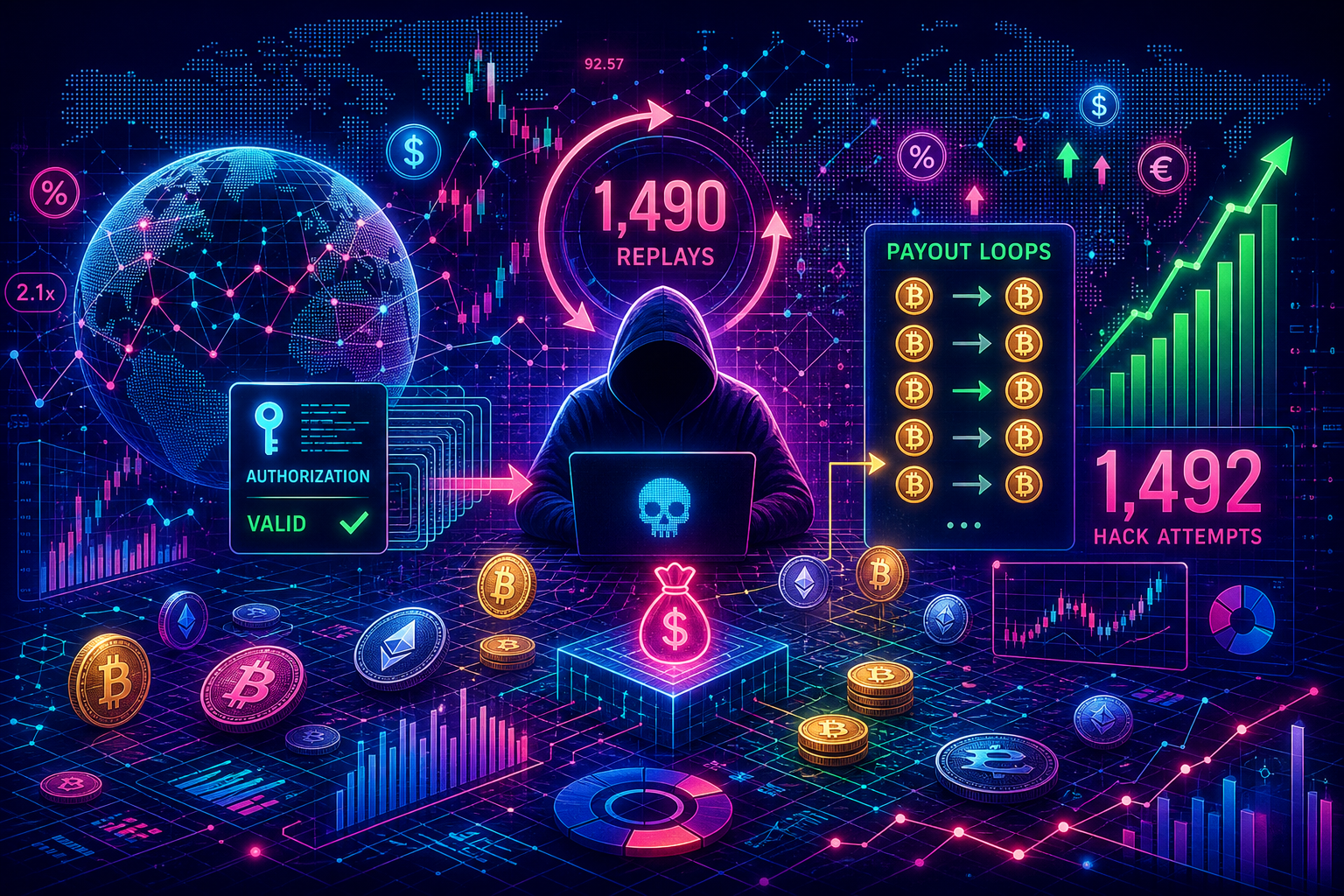
TITLE: ICON's Replay Exploit: How 1,492 Hack Attempts Led to a Crypto Crisis
SUMMARY: A significant security breach on the ICON network allowed a hacker to replay valid withdrawal messages, resulting in a massive outflow of crypto assets. This incident highlights vulnerabilities in blockchain technology and the urgent need for robust security measures.
Introduction
In the rapidly changing world of cryptocurrencies and decentralized finance (DeFi), security breaches have become alarmingly common. One recent incident has raised eyebrows within the crypto community, highlighting vulnerabilities even in established networks. On August 27, 2023, the ICON blockchain suffered a replay exploit that allowed an attacker to reuse valid withdrawal messages a staggering 1,492 times, draining millions in crypto assets. This article delves into the intricacies of the exploit, the subsequent fallout, and the broader implications for blockchain security.
What Happened?
The ICON Foundation reported that the replay exploit resulted in the unauthorized release of 119.9 million ICX (ICON's native token) and 531,600 bnUSD (a stablecoin). The foundation clarified that while 1,490 calls succeeded in transferring these assets, the confirmed losses amounted to approximately 150.2 ETH and 31,204 USDC.
The Mechanics of the Exploit
At the core of this incident lies a flaw in the way ICON's blockchain handled withdrawal messages. The hacker was able to change a part of the withdrawal identifier without altering the signed payload that was verified by the network. This discrepancy was traced back to an attempt to standardize withdrawal messages to a fixed size of 32 bytes. However, this adjustment unintentionally routed part of the serial number through float64-range logic, undermining the uniqueness of the withdrawal requests.
Key Takeaways from the Exploit: - The hacker exploited a mismatch in the system, allowing multiple calls to appear unique despite using the same signature. - The flaw was specific to ICON's implementation, as other supported chains used fixed-width integers that did not produce the same issue. - Two of the withdrawal calls reverted, but the vast majority successfully credited the hacker's wallet.
Response and Recovery
Detection and Containment
The exploit was detected just moments after it began, with ICON's monitoring system alerting the technical team at 02:08 UTC, seven minutes post-exploit. However, it took 92 minutes before the affected contract was paused, allowing the attacker to continue their operations. By the time ICON halted the network at 06:18 UTC, significant funds had already been split and transferred to various exchange deposit addresses.
Timeline of Key Events: - 02:08 UTC: Monitoring system alerts triggered. - 03:40 UTC: Technical staff began investigating the incident. - 03:53 UTC: The affected contract was paused. - 05:20 UTC: The attacker ceased distribution of stolen assets. - 06:18 UTC: Network halted. - 07:51 UTC (next day): Network resumed after approximately 25 hours.
Asset Recovery Efforts
According to the ICON Foundation, the vast majority of the stolen ICX tokens have been tracked, frozen, and are currently in recovery efforts. The foundation reported that all bnUSD and SODA tokens were recovered in full, although amounts held by exchanges remain uncertain.
The incident served as a wake-up call for exchanges like Bitvavo, Bitget, and KuCoin, which quickly suspended ICX deposits and withdrawals in response to the exploit. However, none of these exchanges confirmed whether they were holding any of the hacker's funds or the amounts that remained frozen.
Broader Implications for Blockchain Security
Understanding the Importance of Security Audits
The ICON incident underscores the critical need for comprehensive security audits within blockchain technologies. A review conducted in November 2022 did examine selected relay and verifier code; however, it did not identify the specific flaw that allowed for this exploit. This gap in the audit process highlights the necessity for more thorough testing and verification, particularly in complex systems like blockchain.
The Ripple Effect on the Crypto Ecosystem
The fallout from the ICON exploit extends beyond its immediate financial implications. It raises important questions about the security of decentralized finance platforms and the potential risks faced by users and investors.
- Investor Confidence: Incidents like these can erode trust among investors, making them hesitant to engage with blockchain technologies.
- Regulatory Scrutiny: As the frequency of such hacks increases, regulatory bodies are likely to impose more stringent security measures on blockchain networks to protect consumers.
- Innovation vs. Security: The balance between rapid innovation and adequate security measures is delicate. While developers work tirelessly to enhance functionality, security cannot be an afterthought.
Real-World Examples of Similar Exploits
ICON is not the first network to face such a significant security breach. Other notable incidents include:
-
Harmony Protocol's Exploit: In June 2022, Harmony faced a massive breach where hackers managed to drain over $100 million from its Horizon bridge, exploiting vulnerabilities in the cross-chain protocol.
-
Poly Network Hack: One of the most infamous hacks occurred in August 2021 when Poly Network lost over $600 million due to a vulnerability in its smart contracts. The hacker later returned most of the funds, but the incident served as a stark reminder of the risks associated with DeFi.
-
BSC Token Exploit: In 2021, hackers exploited a vulnerability in Binance Smart Chain, leading to losses of more than $70 million. This incident prompted discussions about the need for improved security standards across blockchain platforms.
Moving Forward: Lessons Learned
The ICON replay exploit offers valuable lessons for the entire crypto industry. Here are some key takeaways:
-
Enhancing Security Protocols: Developers must prioritize security in the early stages of design and implementation. This includes conducting regular audits and stress tests to identify vulnerabilities before they can be exploited.
-
Community Education: Users should be educated about potential risks and how to protect their assets. This includes understanding how withdrawal processes work and recognizing signs of suspicious activity.
-
Collaboration Across the Ecosystem: The crypto community should foster collaboration among developers, security experts, and regulators to create a more secure environment for all participants.
Conclusion
As the cryptocurrency landscape continues to evolve, incidents like the ICON replay exploit serve as critical reminders of the importance of security. The need for robust protocols and thorough audits cannot be overstated, especially as the industry matures and attracts more mainstream attention. By learning from past mistakes and implementing stronger safeguards, the crypto community can work towards a safer future for all participants.
In a world where trust is paramount, ensuring the integrity of blockchain technology is not just a technical challenge—it's a necessity. As we look to the future, the lessons learned from the ICON incident will undoubtedly shape the strategies employed by networks and developers alike, paving the way for a more secure and resilient crypto ecosystem.








No comments yet. Be the first to share your thoughts!