




Introduction
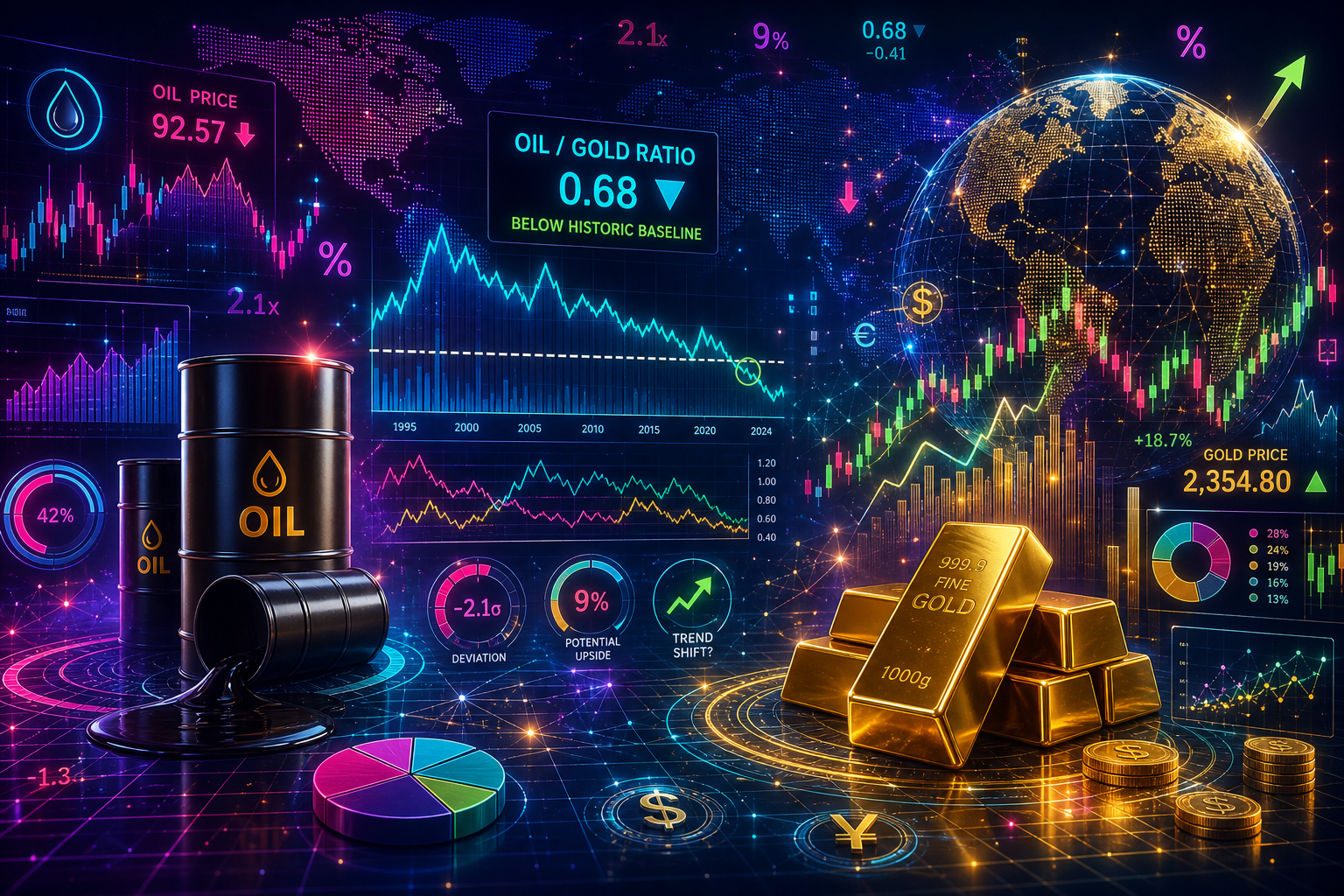
In the world of commodities, few relationships are as closely scrutinized as that between oil and gold. Historically, these two precious resources have displayed a complex interdependence, serving as barometers of economic health and investor sentiment. Recently, the oil-to-gold ratio has dipped below its long-standing average of 0.03 bbl/oz, creating a topic of interest for investors looking for strategic opportunities. This article aims to dissect this ratio's movements and explore its implications for investment strategies, particularly focusing on gold as a hedge against economic uncertainty.
The Current Landscape: Understanding the Oil-to-Gold Ratio
The oil-to-gold ratio is a valuable metric that helps investors gauge the relative value of oil against gold. As of now, this ratio has breached its historical floor, hovering around levels not seen in recent years. The implication? A potential momentum reversal might be on the horizon.
Historical Context
To appreciate the significance of the current ratio, one must look back at historical trends. For instance, between 1976-1982 and again from 2005-2008, the oil-to-gold ratio exhibited similar patterns characterized by Ichimoku cloud formations—indicative of potential price movements. In these historical contexts, a decline in the ratio often preceded significant rallies in gold prices.
Recent Developments
From 2022 to the present, the market has seen fluctuations influenced by geopolitical tensions, supply chain disruptions, and evolving monetary policies. The effects of the COVID-19 pandemic still resonate, impacting oil production and consumer demand. As a result, investors are increasingly seeking safe-haven assets like gold, further complicating the oil-gold relationship.
Analyzing the Current Dip
The recent dip in the oil-to-gold ratio signifies more than just a momentary lapse; it presents a strategic opportunity for investors.
Data-Backed Insights
Recent analyses reveal that this rare decline offers a data-backed justification for employing the oil-to-gold ratio as a capital management tool. Here are key data points supporting this view:
- Historical Averages: The long-term average of 0.03 bbl/oz suggests that the current levels are unsustainable. Historically, when the ratio dips significantly below this average, it has often rebounded in favor of gold.
- Market Sentiment: Investor sentiment is shifting towards gold as inflationary pressures and uncertainty in global markets continue to mount.
- Technical Indicators: The Ichimoku cloud pattern observed in both historical and current data points to a potential reversal, making a compelling case for gold.
Why Gold? The Superior Long-Term Hedge
While oil has its periodic outperformance, gold has consistently demonstrated its value as a long-term hedge against economic turmoil.
The Case for Gold
- Inflation Hedge: Gold has historically maintained its value in inflationary periods, serving as a reliable store of wealth.
- Crisis Commodity: In times of geopolitical instability, gold often sees increased demand as investors flock to safer assets.
- Currency Depreciation: As central banks around the world increase money supply, the value of fiat currencies can decline, making gold an attractive alternative.
Real-World Examples
- 2008 Financial Crisis: During the financial meltdown, gold prices surged, whereas oil prices plummeted, highlighting gold's resilience.
- Pandemic Panic: In early 2020, as COVID-19 struck, gold prices soared to record highs, while oil prices faced unprecedented lows due to demand shock.
Strategic Capital Management: Leveraging the Ratio
Given the current circumstances, how can investors effectively leverage the oil-to-gold ratio within their portfolios?
Ratio Trading
Ratio trading involves taking advantage of the price discrepancies between two correlated assets—in this case, oil and gold. By investing in gold while the oil-to-gold ratio is low, investors can capitalize on an expected rebound.
Steps for Implementation:
- Monitor the Ratio: Keep a close eye on the oil-to-gold ratio for signs of recovery.
- Diversify Investments: Consider a diversified portfolio that includes both gold and oil but leans towards gold during periods of low ratios.
- Utilize ETFs: Exchange-traded funds (ETFs) focused on gold can provide an accessible way to gain exposure to this asset class without the need for physical ownership.
Broader Implications: What Does This Mean for Investors?
The dip in the oil-to-gold ratio isn't just a fleeting market anomaly; it carries broader implications for investors navigating an increasingly complex financial landscape.
Economic Indicators
This ratio can serve as a leading economic indicator, reflecting shifts in market sentiment and fundamentals. A rebound in gold prices alongside a recovery in the oil-to-gold ratio may signal a broader recovery in global markets or an impending economic crisis.
Portfolio Resilience
Incorporating gold into investment strategies not only diversifies risk but also bolsters portfolio resilience against market volatility. By understanding the historical context and current dynamics of the oil-gold relationship, investors can make informed decisions that align with their financial goals.
Conclusion: A Call to Action for Investors
In summary, the current state of the oil-to-gold ratio presents a unique opportunity for informed investors. By analyzing historical patterns, current market conditions, and the inherent strengths of gold as an asset, savvy investors can position themselves advantageously.
As the global economy continues to experience uncertainty, gold stands out as a time-tested hedge, particularly in light of the recent dip in the oil-to-gold ratio. For those looking to navigate the complexities of modern finance, now may be the ideal moment to reevaluate investment strategies and consider the potential benefits of a gold-centric approach.
Final Thoughts
As always, it’s crucial to conduct thorough research and consult financial advisors before making investment decisions. While the oil-to-gold ratio may indicate promising trends for gold, individual circumstances and risk tolerance should guide investment strategies. In the ever-evolving world of finance, knowledge remains the most powerful tool at an investor's disposal.








No comments yet. Be the first to share your thoughts!