




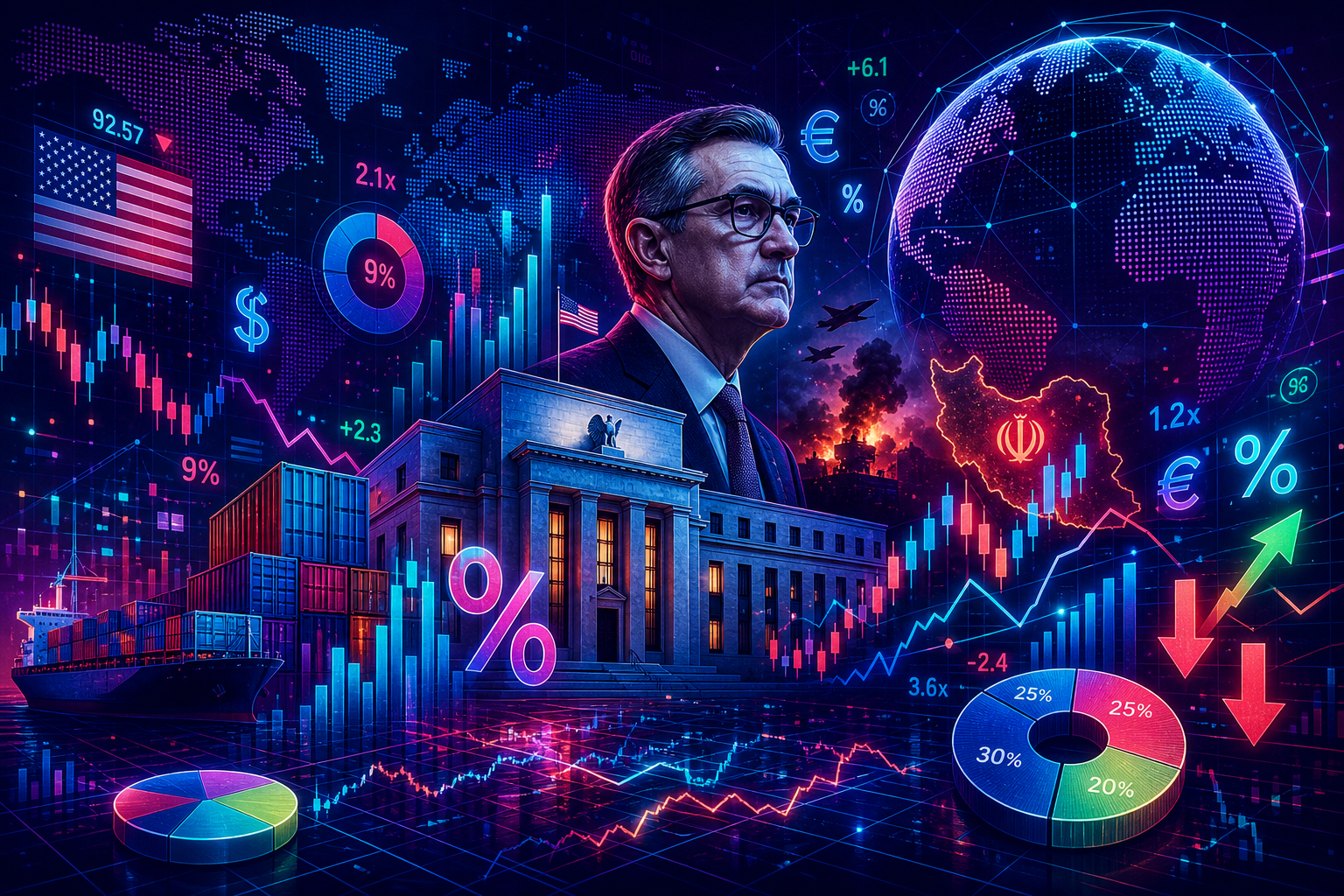
In the intricate dance between governmental policy and monetary regulation, few things can topple the delicate balance as swiftly as high inflation and geopolitical tensions. As the Federal Reserve (the Fed) gears up for a possible interest rate hike this week, the spotlight shines on Fed Chairman Kevin Warsh—an appointee of President Donald Trump—who faces intense scrutiny due to the administration's controversial policies. The stakes are high as this decision could ripple through financial markets and the broader economy, potentially altering the trajectory of U.S. fiscal health.
The Current Economic Landscape
Recent developments have cast a long shadow over the Fed's ability to maintain its dual mandate: maximizing employment while ensuring stable prices. With inflation on the rise, bolstered by ongoing tariff battles and the protracted conflict with Iran, the Fed finds itself at a crossroads, contemplating the necessity of an interest rate increase.
As of late 2023, inflation has shown signs of persistence, driven in part by soaring energy prices and supply chain disruptions. The complexities of these issues cannot be understated. The Fed's traditional approach to rate-setting is being challenged by a unique set of circumstances, primarily shaped by the Trump administration's policies.
Trump’s Policies and Their Economic Impact
The policies emanating from the Trump administration have significantly impacted the economic environment. Notably, the application of tariffs and the ongoing Iran conflict have contributed to rising inflation expectations and economic uncertainty.
-
Tariffs: The administration's imposition of tariffs has created a ripple effect throughout various industries, leading to increased costs for consumers. While the government may argue that these tariffs protect domestic industries, the reality is that they often lead to higher prices for goods. Just last week, President Trump announced new tariffs on Canada in response to their retaliatory measures, heightening tensions and complicating the inflationary landscape.
-
Iran Conflict: The conflict with Iran, which has seen no signs of resolution, adds another layer of complexity. The ongoing instability in the Middle East has led to volatile oil prices, and the recent temporary shutdown of the Saudi East-West pipeline has exacerbated the situation. With oil prices hovering around $100 per barrel, the Fed is forced to grapple with the implications for inflation, as rising diesel prices threaten to escalate costs across various sectors, including food and transportation.
The Fed's Quandary: Rate Hikes and Inflation Control
As the Fed weighs its options, the stakes are high. Historically, the central bank has demonstrated a willingness to "look through" temporary supply shocks. However, the current environment may no longer allow for such leniency. Fed officials are acutely aware that sustained inflation could become entrenched, necessitating a more aggressive monetary policy stance.
In recent communications, Warsh has articulated a clear message: if underlying inflation does not show signs of declining, the Fed will need to take action. This sentiment has been echoed by Fed President Neel Kashkari, who recently expressed concerns over the cumulative effects of successive supply shocks.
- Historical Lessons: The Fed's response to inflationary pressures in the 1970s serves as a cautionary tale. During that decade, policymakers ultimately concluded that tight monetary policy was essential to restore price stability. The current generation of Fed officials is likely to be influenced by these historical precedents as they navigate the current crisis.
Warsh’s Credibility at Stake
The credibility of Fed Chairman Warsh is intricately linked to his ability to respond effectively to this challenging environment. Trump's public calls for lower interest rates have put the chairman in a precarious position; he must balance the administration's wishes against the necessity of addressing inflation.
Warsh's inaugural congressional testimony highlighted his commitment to independence from political pressures. In a landscape where the president has openly criticized the Fed's decisions, the chairman's reputation is under scrutiny. Many observers have noted that the Fed risks losing credibility if it fails to take decisive action in the face of rising inflation.
- Market Expectations: Futures markets are signaling a high probability of multiple rate hikes through early 2024, reflecting growing expectations of tighter monetary policy. Analysts suggest that if Warsh and his colleagues fail to act now, they may find themselves in a more challenging position down the line as inflationary pressures become more entrenched.
The Broader Implications of Fed Policy
The implications of the Fed's decisions are far-reaching, affecting not only financial markets but also the broader economy. A rate hike, while aimed at curbing inflation, could also slow economic growth and impact employment. The delicate balance between controlling inflation and fostering a conducive environment for job creation is a challenge that the Fed must navigate carefully.
-
Impact on Consumers: Higher interest rates could lead to increased borrowing costs for consumers, affecting everything from mortgages to auto loans. This, in turn, could dampen consumer spending, which is a vital component of economic growth. The Fed will need to weigh these considerations as it deliberates over its next moves.
-
Global Economic Considerations: The Fed's decisions do not occur in a vacuum. Global economic conditions, including the policies of other central banks and geopolitical events, will also influence the effectiveness of U.S. monetary policy. As economies worldwide grapple with similar inflationary pressures, the interconnectedness of global markets means that the Fed's actions could have far-reaching implications beyond American shores.
A Call for Independence: The Fed's Role
It is crucial to emphasize that the Federal Reserve's primary role is to assess the impact of governmental policies on the economy, without passing judgment on their merit. The central bank's decisions should be based on data-driven analysis rather than political pressures.
In his recent speeches, Warsh has underscored the importance of maintaining the Fed's independence, emphasizing that the central bank must act in the best interest of the economy, even if that means defying the administration's desires. This commitment to independence is essential for fostering trust in the Fed's ability to manage monetary policy effectively.
Conclusion: Navigating the Path Forward
As the Federal Reserve approaches a critical juncture, the interplay between Trump’s policies and the central bank’s monetary decisions will continue to shape the economic landscape. Fed Chairman Kevin Warsh faces a formidable challenge: to navigate the complexities of inflationary pressures while maintaining the integrity of the institution he leads.
In these uncertain times, the path forward may require tough decisions that could have significant consequences for the economy. Disentangling the effects of tariffs and geopolitical conflicts from underlying economic indicators will be paramount for the Fed as it seeks to restore stability in a rapidly changing environment.
As markets await the Fed's decision, all eyes will be on Warsh and his team, who must rise to the occasion and demonstrate their commitment to combating inflation while upholding the principles of monetary independence. The coming weeks will test not only the Fed's resolve but also its ability to steer the economy through turbulent waters, reaffirming its role as a pillar of economic stability in the face of political pressures.








No comments yet. Be the first to share your thoughts!