




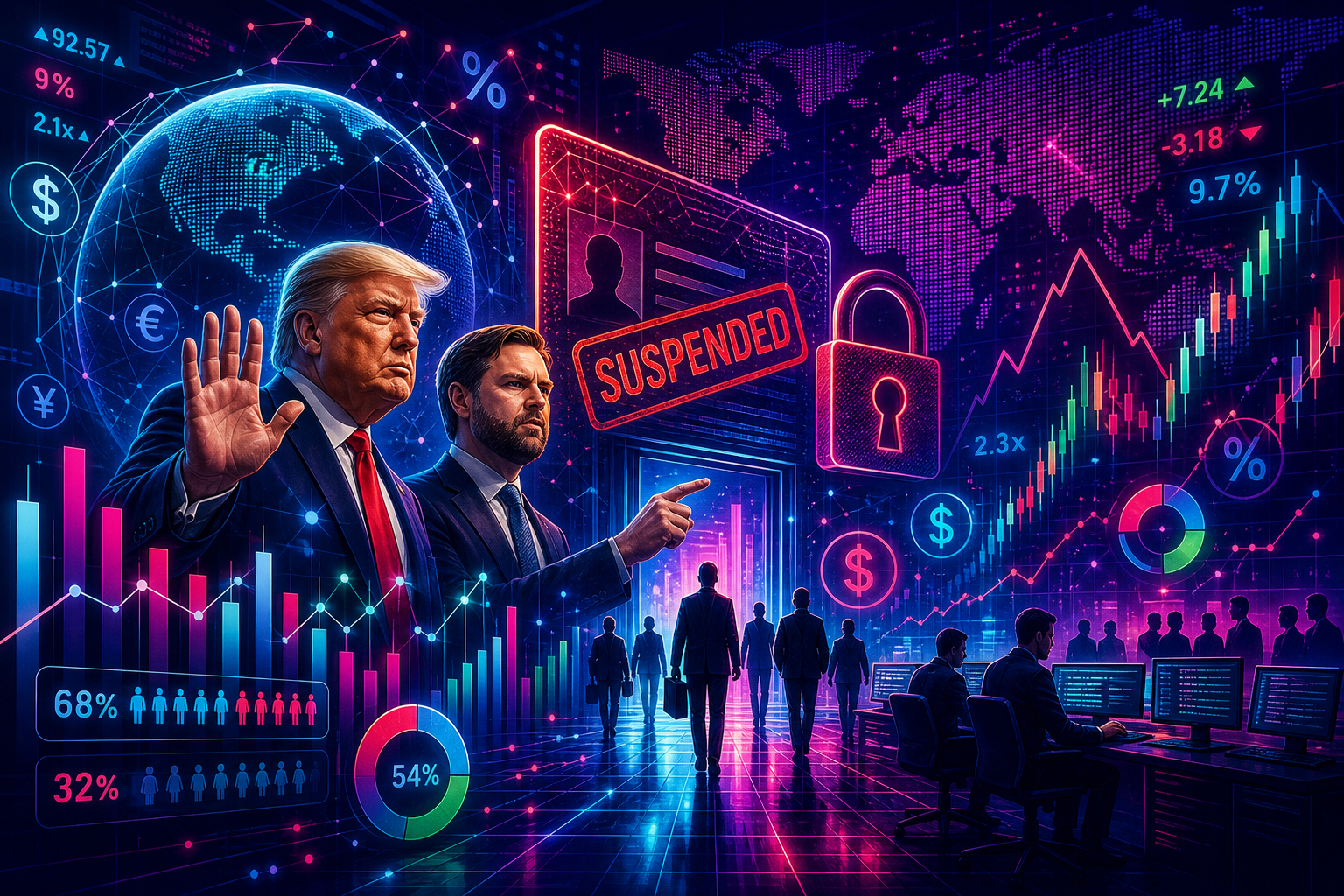
In a significant announcement that has rippled through the tech industry and ignited debates on immigration policy, the Trump administration has suspended Microsoft and a number of other companies from a federal program that allows foreign workers to apply for green cards. This decision, made public by Vice President JD Vance, coincides with ongoing controversies surrounding the employment of foreign talent in the United States, particularly in technology and academia.
Background: The Green Card Program
The U.S. employment-based immigration system has long included various pathways for skilled foreign workers, with the H-1B visa program being one of the most prominent. This program is designed to allow U.S. employers to hire foreign workers for specialized positions when qualified American workers are unavailable. The process includes job advertising requirements that employers must fulfill before they can apply for a green card for a foreign employee, demonstrating a genuine lack of qualified American candidates.
However, the H-1B program has faced intense scrutiny, particularly from factions within the Republican Party and some labor advocates, who argue that it undermines American workers by allowing companies to pay lower wages to foreign employees. Critics claim that the program is often abused, enabling employers, especially in the tech sector, to replace American workers with cheaper labor.
The Administration's Critique
Vice President Vance, echoing sentiments held by many Trump supporters, criticized Microsoft for allegedly misusing the H-1B program. In a press conference, he stated that the tech giant had laid off 6,000 American workers while simultaneously applying for 6,300 H-1B visas and nearly 3,000 green cards in the same period. “For every worker that Microsoft laid off, they replaced that worker with one and a half foreign indentured servants,” Vance declared, framing the issue as a direct threat to American jobs.
The implication of Vance’s remarks is clear: the administration sees a need to reinforce the notion that American jobs should be safeguarded from foreign talent, particularly when American companies are perceived to be taking advantage of immigration programs. “Our message to Microsoft is: You’re a great American company, but you’ve got to hire great American workers,” he continued.
Microsoft’s Response and Position
In light of the accusations, Microsoft has pushed back, defending its hiring practices and the necessity of foreign workers in certain positions. The company stated that approximately 80% of its H-1B applications from the previous year were to extend or change the status of existing employees, rather than to hire new workers. Furthermore, Microsoft argued that the majority of the individuals for whom they sought new H-1B visas were already within the U.S., thus challenging the narrative that they were replacing American workers en masse.
Doug Rand, a former senior adviser at U.S. Citizenship and Immigration Services (USCIS), criticized Vance’s announcement as “incoherent,” pointing out that green card status allows H-1B workers to change jobs freely and negotiate better wages, which contradicts the “indentured servant” narrative.
Broader Implications for the Tech Industry
The suspension of Microsoft and other firms from the green card program raises critical questions about the future of talent acquisition in the tech industry. With the U.S. facing a significant skills gap in various high-demand fields, particularly in technology, the restriction on foreign workers could exacerbate existing labor shortages.
Tech giants like Microsoft, Amazon, and Google rely heavily on skilled foreign labor to fill roles that are often difficult to staff with U.S. workers alone. According to data from USCIS, companies like Amazon are at the forefront of H-1B visa applications, reflecting the industry's dependence on international talent. The tech sector has historically argued that attracting the best and brightest from around the world is essential for maintaining the U.S.'s competitive edge in innovation and technology.
The Role of Educational Institutions
The Trump administration has also broadened its focus to include universities that host international students, particularly those participating in J-1 exchange programs. Vance's comments pointed to alleged abuses within this system, where institutions are accused of exploiting visa programs to draw in foreign students under the guise of academic exchange. The administration has singled out several prestigious universities, including Harvard, Stanford, and MIT, for further investigation, suggesting that these institutions may be disproportionately benefiting from visa programs.
This scrutiny of universities adds another layer to the complex dialogue surrounding immigration policy, particularly in academia. Supporters of international education argue that these programs enrich the U.S. educational landscape and foster global collaboration, while critics assert that they dilute opportunities for domestic students.
The Ongoing Debate Over H-1B Visas
The H-1B visa program has been a focal point of the immigration debate for years. Proponents argue that it is essential for filling skilled positions that cannot be met by the domestic workforce, thus driving innovation and economic growth. Critics, however, contend that the program is often misused, allowing companies to sidestep American talent and pay less to foreign workers.
In 2020, the Trump administration attempted to increase the fees associated with H-1B applications dramatically, proposing a $100,000 fee to discourage employers from hiring foreign workers. However, a federal judge struck down this proposal, leading to ongoing discussions about the program's future. The administration has since floated a new fee structure aimed at offsetting the costs of managing the immigration system, but it, too, is expected to face legal challenges.
Conclusion: A Complex Landscape Ahead
The suspension of Microsoft and other firms from the green card program highlights the growing tensions between immigration policy and the labor market, particularly within the tech industry. As companies navigate the challenges of hiring in a competitive landscape, the implications of these administrative decisions could resonate far beyond the immediate impacts on employment.
The dialogue surrounding H-1B visas and foreign student programs is likely to continue evolving, driven by political agendas, economic realities, and the pressing need for skilled labor in the U.S. As the administration seeks to reshape immigration policy, both companies and educational institutions must prepare for a future where access to global talent may be increasingly restricted.
Ultimately, the stakes are high: for tech firms, the ability to attract top talent is critical for innovation; for American workers, safeguarding job opportunities remains paramount. Balancing these interests will require careful consideration and ongoing dialogue, making this an issue to watch closely in the months and years ahead.








No comments yet. Be the first to share your thoughts!