




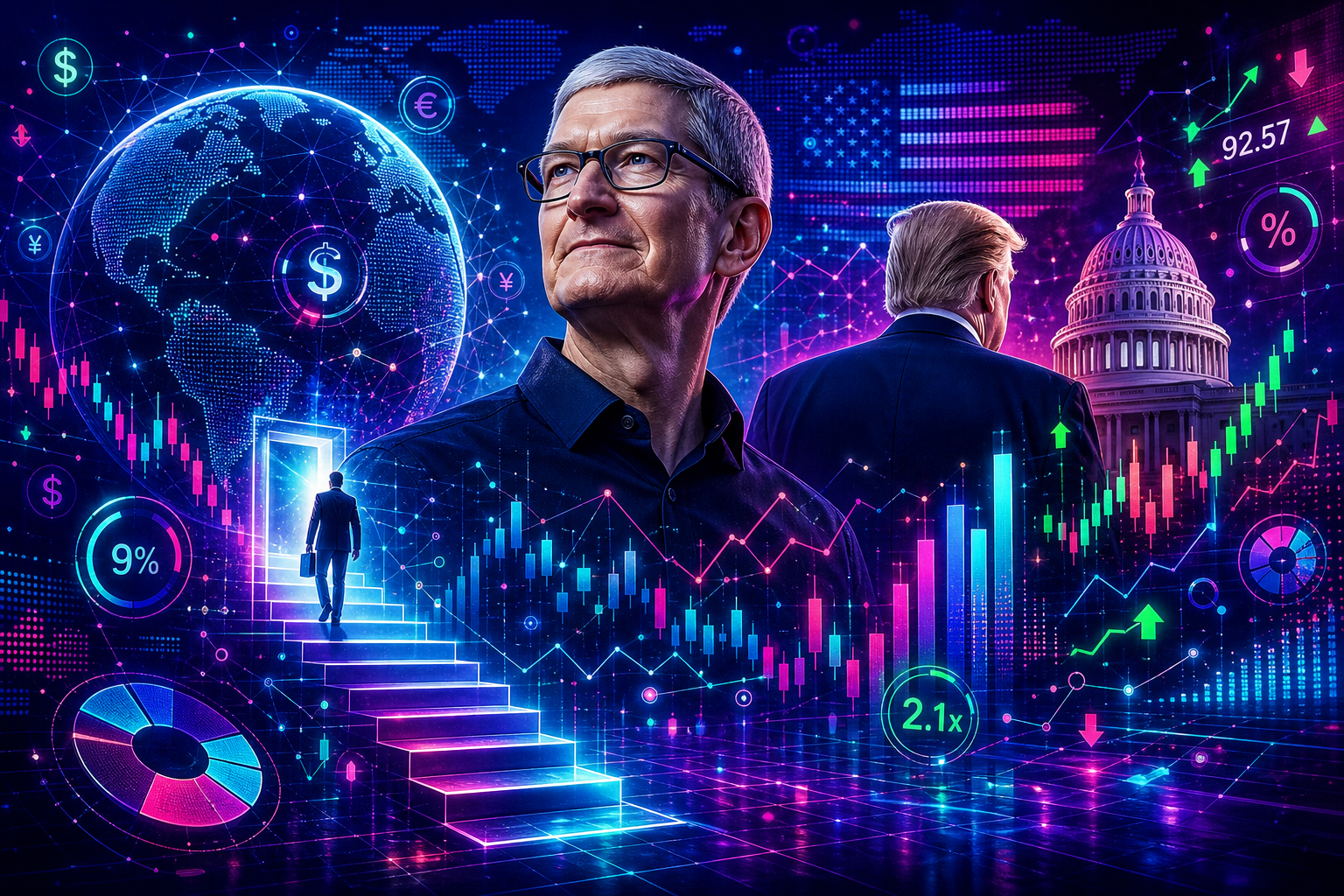
Tim Cook’s recent transition from CEO to executive chair of Apple Inc. marks the end of an era for one of the most influential figures in modern technology. After a remarkable 15-year tenure leading the company, Cook has passed the CEO title to John Ternus, who has been a key figure in Apple’s hardware division. However, Cook’s departure from the top operational role does not signify an exit from Apple. Instead, he will maintain a prominent presence as executive chair, earning a substantial annual salary and contributing to major strategic decisions, particularly regarding the company’s relationships with policymakers worldwide.
The Details of the Transition
Effective September 26, Cook will receive an annual salary of $2 million, alongside a potential equity award valued at $45 million, as disclosed in a regulatory filing. His continued involvement in Apple’s strategic direction will play a critical role in the company’s future, especially as it navigates complex global issues. As Apple’s executive chair, Cook will focus on engaging with international policymakers and guiding the company through its intricate web of geopolitical challenges.
Cook’s decision to remain engaged comes at a crucial time when Apple is trying to balance its vast Asian supply chain with the political landscape influenced by trade tensions between the U.S. and China. His deep understanding of these dynamics was evident during his tenure as CEO, as he adeptly managed the company's relationships with political figures, most notably former President Donald Trump.
Tim Cook: The ‘Trump Whisperer’
Cook earned the nickname “Trump whisperer” due to his unique ability to engage with the Trump administration effectively. From early on, he demonstrated a knack for gaining the president's ear. In 2019, Trump publicly acknowledged this relationship, revealing that Cook was one of the few CEOs who could directly communicate with him. Their conversations often revolved around pressing economic issues, particularly tariffs that directly affected Apple’s business model.
In 2025, as the political climate shifted, Cook's influence was put to the test. After announcing a $500 billion investment in the U.S., which included hiring 20,000 American workers, Cook found himself navigating a complicated relationship with Trump. The president publicly criticized Apple for expanding iPhone production in India, insisting that the company should focus on manufacturing within the United States. This back-and-forth exemplified the challenges Cook faced in maintaining a delicate balance between operational strategy and political pressures.
Navigating Trade and Tariff Battles
As Cook worked to solidify Apple's position in the U.S. market, he also had to address the rising tensions between the U.S. and China. Apple's reliance on China for manufacturing made it vulnerable to the shifting political landscape, especially during the Trump administration, which aggressively pursued tariffs against Chinese goods. Cook responded by negotiating directly with Trump, arguing that tariffs on Apple products could disadvantage the company against competitors like Samsung.
In a notable instance, after a tense exchange regarding production in India, Cook returned to the Oval Office bearing a symbolic gift for Trump—a customized “Made in USA” glass plaque, mounted on a 24-karat gold stand. This gesture underscored Cook’s strategy of promoting U.S. manufacturing while also attempting to placate the administration’s concerns over Apple’s foreign production.
In August 2025, amid ongoing trade negotiations, Apple announced an additional $100 billion commitment to U.S. manufacturing, raising its total planned domestic spending to $600 billion over four years. This announcement was timely, as Trump prepared to impose steep tariffs on imported semiconductor chips, which could have jeopardized Apple's supply chain. The president assured that companies investing in the U.S. would be shielded from these tariffs, further highlighting the mutually beneficial relationship between Cook and Trump.
Global Implications of Cook’s New Role
Cook’s transition to executive chair brings significant implications not only for Apple but also for the broader technology industry. His continued involvement with policymakers suggests that Apple will remain at the forefront of discussions about technology regulation, trade policies, and economic strategy. As the tech landscape rapidly evolves, the need for influential figures who can navigate these complexities has never been greater.
Moreover, Cook’s experience in dealing with the intricacies of U.S.-China relations will be invaluable as Apple continues to rely on its Asian supply chains while also seeking to diversify its manufacturing footprint. The push to reduce dependence on China has already led Apple to increase its production capabilities in countries like India and Vietnam. However, these shifts come with their own challenges, such as ensuring quality control and maintaining supply chain efficiency.
A Legacy of Growth and Innovation
Tim Cook leaves behind a legacy of remarkable growth and innovation at Apple. When he took over as CEO shortly before co-founder Steve Jobs’ death in 2011, Apple’s market capitalization was around $347 billion. Under Cook’s leadership, that figure skyrocketed to approximately $4.6 trillion, making Apple one of the most valuable companies in the world.
Cook’s tenure was marked by several key milestones, including the launch of groundbreaking products like the Apple Watch, AirPods, and the expansion of services such as Apple Music, Apple TV+, and the App Store. These innovations not only diversified Apple’s revenue streams but also positioned the company as a leader in multiple sectors of the tech industry.
The Future of Apple
As John Ternus steps into the role of CEO, he will inherit a company that is not only financially robust but also deeply intertwined with global politics. The challenges that Cook faced will continue to shape Apple’s strategic decisions, particularly as the company navigates a landscape of heightened scrutiny over issues such as data privacy, antitrust concerns, and environmental sustainability.
Ternus, who has been with Apple for over 20 years, brings a wealth of experience in hardware development and product design. Under his leadership, Apple is likely to continue its commitment to innovation while also reinforcing its position in the global market. The shift in leadership presents an opportunity for fresh ideas and strategies that could propel Apple forward in an increasingly competitive tech landscape.
Conclusion: A New Chapter for Apple
Tim Cook’s departure from the CEO role marks a pivotal moment in Apple’s history. While he may be stepping down from day-to-day operations, his role as executive chair ensures that he will remain a guiding force for the company. As Apple faces new challenges and opportunities in a rapidly changing world, Cook’s experience and relationships will play a crucial role in shaping the tech giant’s future.
As Apple continues to adapt to the complexities of global trade, technological innovation, and consumer expectations, stakeholders will be watching closely to see how Ternus and Cook navigate these waters. With a legacy built on growth, resilience, and strategic engagement, Apple is poised to embark on a new chapter that could redefine the company yet again in the years to come.








No comments yet. Be the first to share your thoughts!