





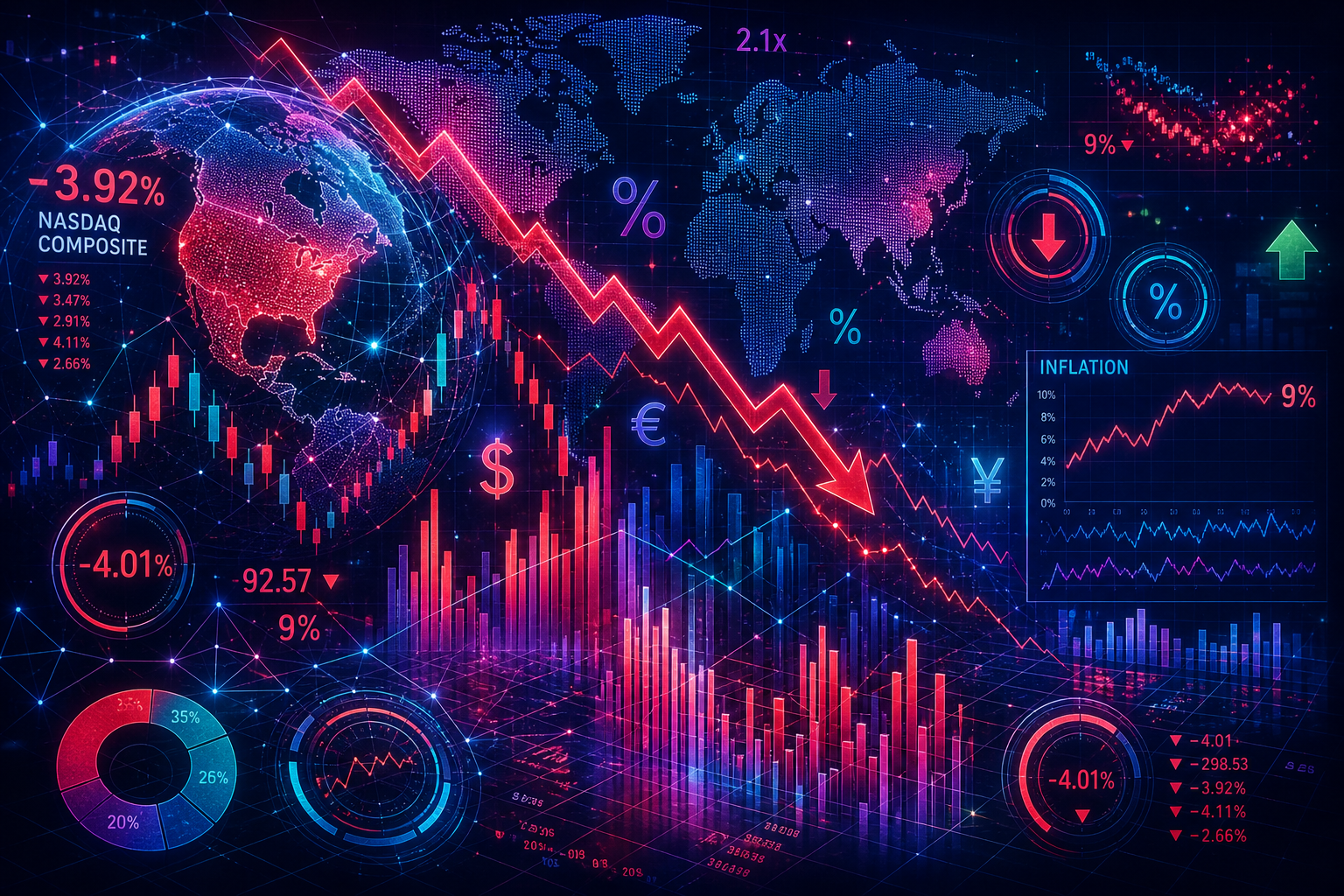
The stock market is experiencing a turbulent day as investors react to a confluence of factors sending major indices into a freefall. On November 25, 2026, the Nasdaq Composite has plunged by 3.98%, reaching 22,789, while the S&P 500 has fallen 2.69% to 7,008, nearing the psychological barrier of 7,000. The Dow Jones Industrial Average is not spared either, declining 1.36% to 49,336. This widespread selling pressure is indicative of a broader market malaise, fueled by persistent inflation and concerns over the sustainability of technology stock valuations, particularly within the artificial intelligence (AI) sector.
The Broader Market Context
A Snapshot of the Decline
As of mid-day, selling has extended beyond equities, with gold tumbling 3.01% to $3,454.60. Meanwhile, the 10-year Treasury yield has edged lower to 4.91%. Interestingly, while energy stocks have managed to outperform the broader market, consumer discretionary shares have endured the steepest losses. This simultaneous weakness in stocks and gold suggests that investors are increasingly prioritizing liquidity in an environment rife with uncertainty surrounding inflation, interest rates, and corporate earnings.
Individual Stock Movements
In the midst of this turmoil, some companies have managed to stand out. For instance, HP Inc. (HPQ) bucked the trend, surging 11.04% after reporting better-than-expected earnings coupled with a positive outlook for fiscal 2027. Conversely, Ambarella (AMBA) faced a stark decline of 19.90% after disappointing investors with its revenue forecast, raising serious concerns about its near-term growth potential.
Notably, semiconductor stocks have continued to face intense selling pressure. Advanced Micro Devices (AMD) fell 9.56%, while Nvidia (NVDA) declined 8.69%. These movements highlight the fragility of the tech sector, especially as investors grapple with the implications of inflated valuations against a backdrop of uncertain economic conditions.
The Underlying Economic Factors
Persistent Inflation Woes
A key driver of today’s market decline is the ongoing challenge of inflation. The latest data reveals that the core personal consumption expenditures (PCE) price index increased by 0.3% for the third consecutive month, a statistic that further intensifies scrutiny on the Federal Reserve's monetary policy strategies. While consumer spending appears resilient, the sustained elevation of inflation poses a significant challenge to the Fed, potentially constraining its ability to ease monetary policy without igniting further price pressures.
Impact on the Federal Reserve
The Fed's dual mandate of promoting maximum employment and stabilizing prices is currently under strain. With inflation remaining stubbornly high, the central bank faces a dilemma. Easing interest rates to foster economic growth could risk exacerbating inflationary pressures, while maintaining the current rate could stifle growth as borrowing costs remain elevated. This precarious balance is reflected in the market’s response, as investors weigh the implications of Fed policies on corporate earnings and overall economic health.
The Technology Sector's Struggles
The AI Bubble: Reality vs. Valuation
The tech sector, particularly those companies heavily invested in AI, finds itself under the microscope. The recent sell-off signals a growing skepticism among investors regarding whether the substantial investments fueling the AI boom will yield sufficient returns to justify their lofty valuations. This skepticism is further compounded by the tech-heavy Nasdaq Composite's continued decline, which is now perilously close to entering bear market territory—a decline traditionally defined as a 20% reduction from its previous high.
Market Sentiment and Corporate Earnings
As fears mount over potential earnings disappointments, investors are left grappling with the question: can the tech sector recover its momentum? A crucial aspect of this recovery will hinge on signs of moderating inflation, improving financial conditions, and a renewed confidence in corporate earnings expectations for 2027. The market's current trajectory suggests a cautious outlook, particularly as selling pressure shows signs of spreading beyond technology stocks.
Broader Implications for Investors
Navigating a Volatile Market
For investors, the current market landscape presents both risks and opportunities. The volatility underscores the importance of a diversified investment strategy. As equities face downward pressure, some investors may find solace in defensive sectors, such as utilities or consumer staples, which tend to be more resilient during economic downturns. Energy stocks, which have outperformed in the current climate, may also be worth considering.
The Importance of Research and Analysis
As always, due diligence is critical. Investors should closely monitor economic indicators, including inflation rates and the Federal Reserve’s policy decisions, as these will play a pivotal role in shaping market dynamics moving forward. Additionally, corporate earnings reports will be instrumental in gauging the financial health of companies, particularly in the tech sector.
Cautious Optimism
While the current environment may seem daunting, it is essential for investors to remain optimistic about the potential for recovery. Short-lived market rallies should not be misinterpreted as a definitive end to broader corrections. Instead, investors should be judicious, seeking out valuable insights and maintaining a long-term perspective.
Conclusion
The midday plunge of the Nasdaq Composite and other major indices on November 25, 2026, signals a challenging period for investors. With inflation remaining stubbornly high and AI stock valuations under scrutiny, the market faces a complex web of challenges. As we look ahead, the ability of the Federal Reserve to navigate these economic waters will be critical. Investors should remain vigilant and informed as they consider their next moves in this volatile landscape.








No comments yet. Be the first to share your thoughts!