





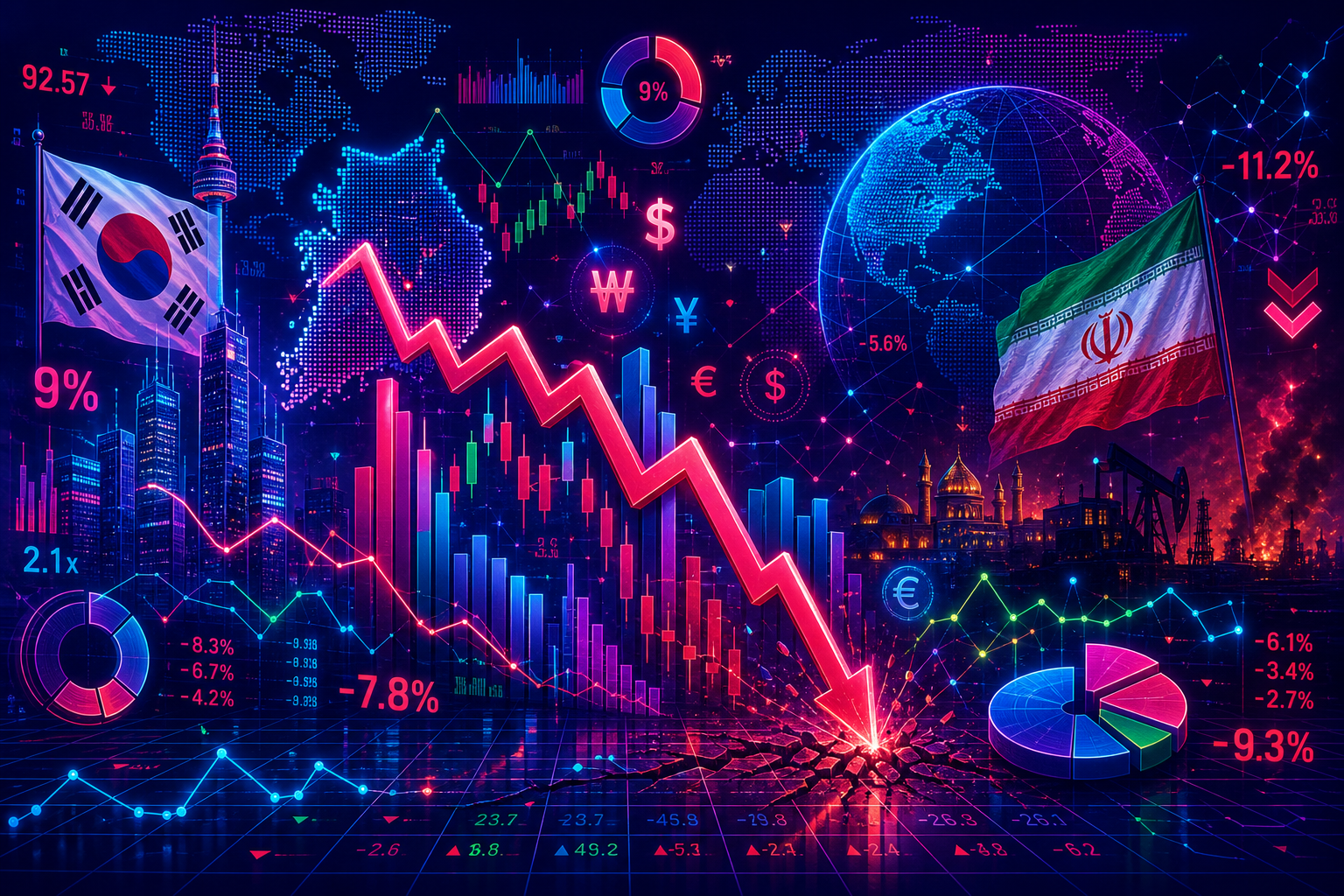
Introduction: A Perfect Storm of Market Disruption
The global financial landscape is experiencing unprecedented turbulence as two seemingly unrelated events converge to create a volatile market environment. The recent steep decline in South Korea's KOSPI index—plummeting by 8.3%—is largely attributed to a comprehensive deleveraging effort within the country. Simultaneously, escalating tensions in the Middle East, particularly concerning Iran, have further exacerbated investor anxiety. This double crisis poses systemic risks not just locally but globally, particularly affecting major tech companies and the broader equity markets.
Understanding the Deleveraging in South Korea
Deleveraging refers to the process by which companies reduce their debt levels, often by selling assets or cutting expenses. In South Korea, this phenomenon has been particularly pronounced among companies heavily invested in the AI sector, including giants like Samsung Electronics and SK Hynix. These firms have been at the forefront of technological advancements and have significantly influenced global supply chains.
As the South Korean economy braces for tighter monetary policy in light of rising inflation rates, the need for firms to cut back on leverage has become increasingly critical. Investors are now assessing the sustainability of the AI boom, as rising interest rates and inflationary pressures complicate the financial landscape.
The KOSPI’s Dramatic Plunge: Causes and Consequences
The KOSPI index, which serves as a key indicator of South Korea's economic health, has seen significant volatility recently. The 8.3% drop signals an urgent reassessment of risk among investors. This decline was driven by a combination of factors:
- High Leverage: Many South Korean companies, particularly in tech, have leveraged substantial debt to fuel growth. As market conditions tighten, these companies are forced to reassess their financial strategies.
- Inflation Pressures: South Korea, like much of the world, is grappling with rising inflation rates. This trend has led to fears of decreased consumer spending and slower economic growth.
- Interest Rates: The prospect of sustained high interest rates poses a risk to both consumer spending and corporate profitability, particularly for tech firms that rely on borrowing for expansion.
The repercussions are profound. With significant exposure to AI, a sector that has been touted as the future of technology, any setbacks in South Korea could have cascading effects on global tech stocks, especially those that rely heavily on semiconductor components produced by South Korean firms.
The Broader Implications of Middle East Tensions
Parallel to the financial turmoil in South Korea, geopolitical tensions in the Middle East, particularly involving Iran, have further destabilized market sentiments. Recent developments include:
- Strained Relations: Increasing hostilities and potential military confrontations have raised concerns regarding oil supply disruptions. Given that Iran is a key player in the global oil market, any escalation could lead to significant spikes in energy prices.
- Investor Sentiment: Geopolitical tensions often lead to increased volatility in stock markets as investors shy away from riskier assets. This environment makes it difficult for companies to predict future revenues, further complicating their financial strategies.
The combined effects of South Korea's economic challenges and Middle Eastern tensions create a unique set of circumstances that could alter the trajectories of both regional and global markets.
Analyzing the Impact on the AI Sector
The AI sector, once viewed as an unstoppable force driving innovation and market growth, is now facing significant scrutiny. The following factors illustrate the challenges ahead:
- Valuation Concerns: Rising interest rates and inflation could lead to a reevaluation of growth expectations. Many AI companies have been trading at high multiples, and any sign of slowing growth could lead to sharp corrections.
- Supply Chain Vulnerabilities: As seen during the pandemic, the tech sector is heavily reliant on smooth global supply chains. Any interruptions, whether due to local economic instability or geopolitical strife, could severely impact production timelines and costs.
- Skepticism Among Investors: With the recent downturn in the KOSPI, investors may be more cautious about investing in tech companies perceived as over-leveraged or vulnerable to economic changes.
Strategic Considerations for Investors
In light of these developments, it's crucial for investors to reassess their strategies and consider a more diversified approach. Here are some recommendations:
-
Increase Cash Reserves: Holding cash can provide flexibility during volatile periods, allowing investors to capitalize on lower stock prices during corrections.
-
Diversify Away from High-Risk Sectors: While AI has been a major growth driver, it may be wise to diversify into sectors that show more stability during economic downturns, such as consumer staples or utilities.
-
Monitor Economic Indicators: Keeping a close eye on inflation rates, interest rate decisions, and geopolitical developments can help investors make informed decisions about when to enter or exit positions.
-
Consider Long-Term Trends: While short-term volatility can be unsettling, investors should not lose sight of long-term trends and fundamentals that could drive growth in the future.
Conclusion: Navigating a Complex Financial Landscape
The convergence of South Korea's economic challenges and rising tensions in the Middle East presents a complex landscape for investors. As stock markets react to these dual pressures, maintaining a balanced perspective and strategic approach will be key to navigating these turbulent waters. The emphasis should not solely be on immediate market movements but rather on the underlying economic and geopolitical factors that will shape investor sentiment and market trajectories in the months to come.
Investors must be vigilant, prepared to adapt their strategies, and ready to embrace a diversified portfolio approach as they face the prospect of ongoing volatility. The lessons learned during this time could serve as crucial insights for managing risk and seizing opportunities in an ever-evolving market environment.








No comments yet. Be the first to share your thoughts!