




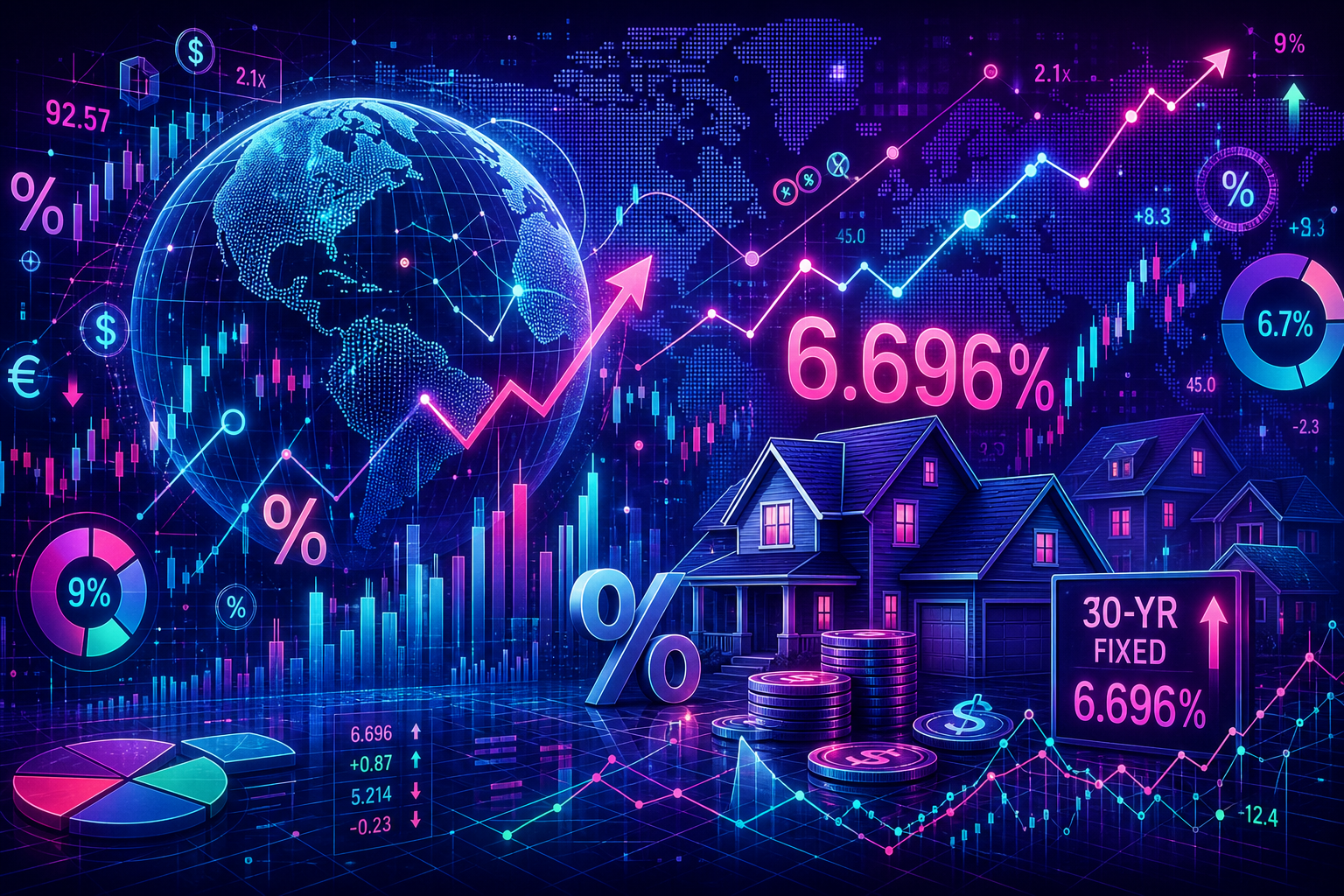
As we step into July 2026, the mortgage landscape is shifting dramatically. Rising interest rates are reshaping the dynamics of home buying and refinancing, presenting both challenges and opportunities for prospective homeowners. According to Zillow's latest data, the average 30-year fixed mortgage rate has climbed to 6.696%, marking a notable increase of 24.1 basis points just in one day. The 15-year fixed rate has also risen to 6.036%, while the 5/1 adjustable-rate mortgage (ARM) has spiked significantly to 6.637%.
The Current State of Mortgage Rates
Let’s break down the current average mortgage rates in detail:
- 30-Year Fixed: 6.696%
- 20-Year Fixed: 6.705%
- 15-Year Fixed: 6.036%
- 5/1 ARM: 6.637%
- 7/1 ARM: 6.59%
- 30-Year VA Loan: 6.103%
- 15-Year VA Loan: 5.773%
- 5/1 VA Loan: 6.913%
Similarly, for those looking to refinance, the rates are not much different:
- 30-Year Fixed: 6.617%
- 20-Year Fixed: 6.66%
- 15-Year Fixed: 5.978%
- 5/1 ARM: 6.36%
- 7/1 ARM: 6.474%
- 30-Year VA Loan: 6.17%
- 15-Year VA Loan: 5.719%
These figures, while national averages, indicate a significant rise compared to previous years, affecting affordability and the decisions of both new homebuyers and existing homeowners looking to refinance.
Understanding the Trends Behind Rising Rates
The surge in interest rates can be attributed to several macroeconomic factors, including:
-
Federal Reserve Policies: The Fed's ongoing efforts to combat inflation have involved raising the federal funds rate, which directly affects mortgage rates. As borrowing costs increase, lenders typically pass these costs onto consumers.
-
Economic Recovery: Following the economic disruptions caused by the COVID-19 pandemic, we are witnessing a recovery phase where demand for housing remains strong, pushing prices and rates higher.
-
Inflation: Continued inflationary pressures have prompted the Fed to maintain a tight monetary policy. Higher inflation generally leads to higher interest rates as lenders seek to compensate for the decreased purchasing power of future payments.
Implications for Homebuyers
For potential homebuyers, rising interest rates mean that the cost of borrowing has increased, which can significantly impact monthly mortgage payments and overall affordability. Here are some considerations for buyers navigating this environment:
Higher Monthly Payments
With the current average 30-year fixed mortgage rate at 6.696%, monthly payments for new purchases will be higher than they were during the pandemic when rates were historically low. For example, on a $300,000 mortgage, the monthly payment at 3% would be approximately $1,265, whereas at 6.696%, it climbs to nearly $1,938.
Reduced Purchasing Power
As rates rise, many buyers may find their purchasing power diminished. Homes that were once within reach may now exceed budgetary constraints, leading some buyers to reconsider their choices or delay purchasing altogether.
Market Competition
Interestingly, while rising rates can cool off some of the fervor in the housing market, they can also lead to increased competition among buyers who are still eager to purchase before rates climb even higher. This could result in a temporary spike in home prices, further complicating affordability.
Pros and Cons of Different Mortgage Types
Understanding the different types of mortgage options and their respective pros and cons is crucial for buyers:
30-Year Fixed Mortgages: The Reliable Choice
- Pros:
- Predictable monthly payments.
-
Lower monthly payments compared to shorter terms, making it accessible for budget-conscious buyers.
-
Cons:
- Higher overall interest payments due to the longer term.
- Higher interest rates compared to shorter fixed options or adjustable-rate mortgages.
15-Year Fixed Mortgages: The Speedy Option
- Pros:
- Lower interest rates compared to 30-year options.
-
Pay off the mortgage in half the time, resulting in significant interest savings.
-
Cons:
- Higher monthly payments may strain budgets.
Adjustable-Rate Mortgages (ARMs)
- Pros:
-
Lower initial rates can provide significant savings in the early years.
-
Cons:
- Uncertainty about future rates can lead to higher payments down the line.
The Refinancing Landscape
For existing homeowners, the question arises: Is now a good time to refinance? While refinancing can offer significant savings, rising rates complicate matters. Here are some important points to consider:
-
Current Rates vs. Existing Rates: If you secured a mortgage at a lower rate previously, refinancing now may not be beneficial unless there are significant changes in your financial situation or home equity.
-
Credit Score and DTI: To secure the best refinancing rates, maintain a strong credit score and a low debt-to-income (DTI) ratio. This can help mitigate the impact of rising rates.
-
Type of Refinance: Homeowners have various refinancing options, including cash-out refinancing or rate-and-term refinancing, each with different implications for monthly payments and long-term financial health.
Strategies for Homebuyers and Refinancers
As the market evolves, certain strategies can position buyers and refinancers for success:
-
Shop Around: Don’t settle on the first offer. Compare rates from various lenders, as there can be significant differences based on local markets and lender policies.
-
Improve Your Financial Health: Focus on boosting your credit score and reducing debts to qualify for better rates.
-
Consider Timing: If you anticipate rates might stabilize or drop slightly, it may be worth waiting to lock in a rate, but balance this against the urgency of your housing needs.
-
Understand Your Needs: Assess whether a fixed-rate or an ARM is more suitable based on your financial situation and expectations for how long you’ll stay in the home.
Looking Ahead: The Housing Market in 2026
As we move through 2026, the outlook for the housing market remains mixed. With continued economic recovery, we may see:
-
Moderation in Home Prices: While prices surged during the pandemic, the recent rise in interest rates may lead to a cooling off in the market, providing some relief to buyers.
-
Potential Rate Stabilization: If inflationary pressures ease, we might see a stabilization in rates, which could encourage more buyers to enter the market.
-
Home Supply Dynamics: The ongoing housing supply shortage may continue to exert upward pressure on prices, even as demand adjusts to higher rates.
Conclusion: Navigating the New Normal
The current rise in mortgage rates presents a complex landscape for both homebuyers and those considering refinancing. Understanding the implications of these rates and developing a strategic approach will be crucial for navigating this shifting market.
While the environment may seem daunting, it’s essential to remember that the best time to buy or refinance is when it aligns with your personal financial situation and life goals. As you embark on this journey, remain informed and proactive in your decision-making to secure the best possible outcomes in today’s dynamic mortgage landscape.








No comments yet. Be the first to share your thoughts!