





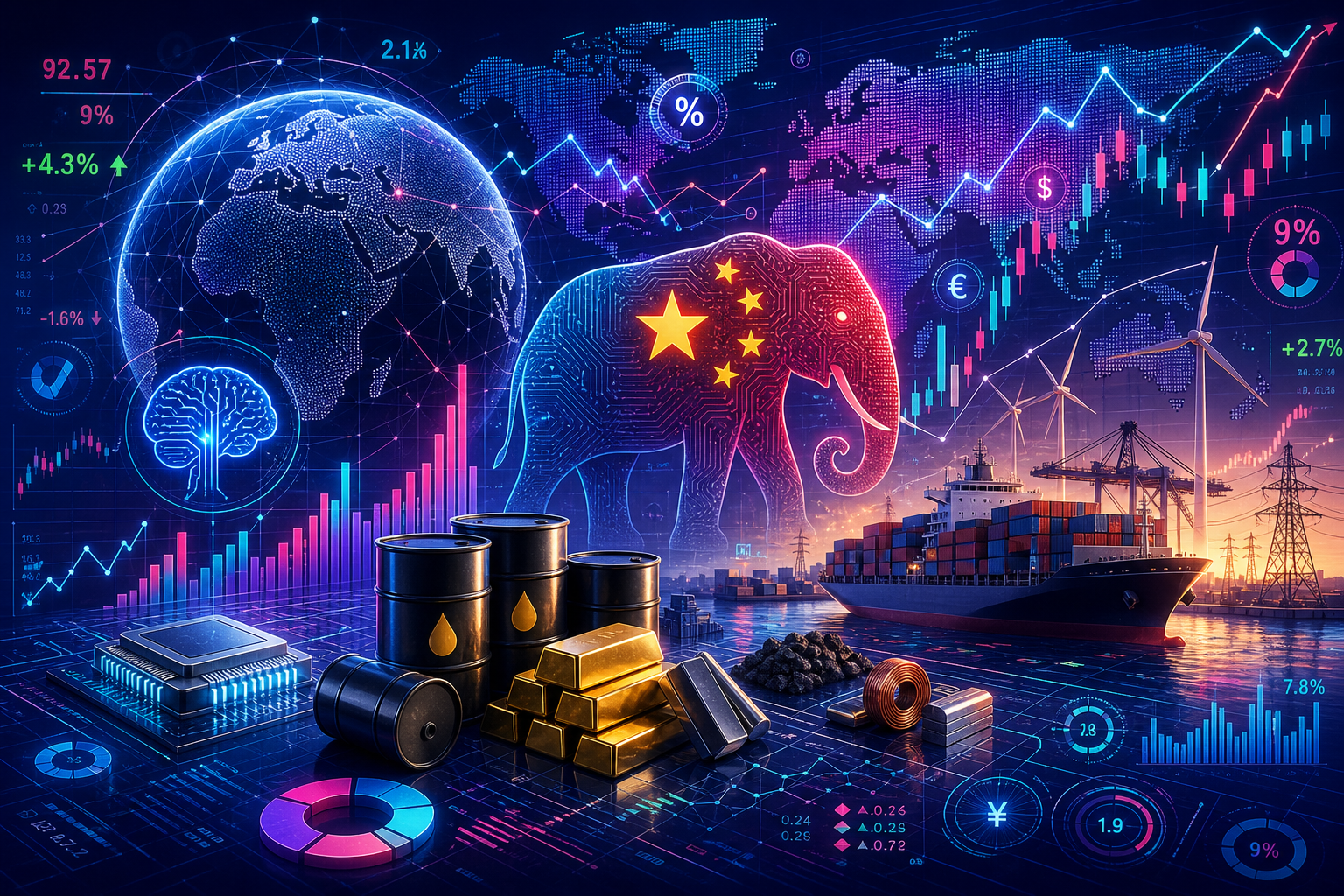
The serene backdrop of a French Alpine town known more for its pristine bottled water than for high-stakes diplomacy is set to host the G7 summit. This gathering of the world's seven largest and wealthiest democracies is not merely a picturesque meeting; it is a critical juncture where pressing global issues like the ongoing conflicts in Ukraine and the Middle East will be addressed. However, underlying these discussions are two intertwined anxieties: the G7's dependency on China for crucial supply chains and its reliance on the United States for artificial intelligence (AI) advancements.
The AI Landscape: A U.S.-China Power Play
As the summit unfolds, one of the key topics on the agenda is the U.S.'s recent export controls on AI technologies, specifically targeting Anthropic's advanced models, Fable 5 and Mythos 5. According to Andrea Renda, research director at the Centre for European Policy Studies, this decision is poised to dominate discussions. The implications of these controls have not gone unnoticed by the other G7 countries, which express frustration over what they see as the U.S. "weaponizing" its AI capabilities against traditional allies.
Renda points out that the U.S.’s differential treatment in granting access to these models has sparked annoyance among G7 partners. This sentiment is echoed by Agathe Demerais, a senior policy fellow at the European Council on Foreign Relations, who argues that the likelihood of a unified G7 stance on AI, especially given the prominent roles of the U.S. and China, is slim. The dominance of the U.S. and China in the global AI landscape, with a staggering 90% of global computing power controlled by these two nations, complicates efforts for a more collaborative international approach.
The Absence of China: A Strategic Move
Interestingly, China is not participating in the G7 summit, further emphasizing its critical role in the discussions. French President Emmanuel Macron had previously contemplated inviting Chinese President Xi Jinping, reflecting an awareness of China's pivotal status in global supply chains. The decision not to extend an invitation underscores a broader strategy: to leverage the U.S.-China rivalry and highlight the complex dependencies that the G7 nations face.
Alisha Chhangani, an associate director at the Atlantic Council’s GeoEconomics Center, suggests that Macron's approach aims to elevate China's role as a significant player in the summit's discourse. By doing so, Macron seeks to remind the U.S. that Europe has other partners to consider, thereby creating potential leverage in negotiations on various issues.
The Challenges of Dependency
The G7's agenda is not merely focused on AI; it also addresses the pressing issue of global supply chain dependencies, particularly on China. The theme of "reducing global imbalances" reflects a diplomatic acknowledgment of these dependencies, particularly regarding China's manufacturing prowess. Chhangani explains that the industrial overcapacity and trade deficits associated with China are critical issues that the G7 must confront.
In the realm of critical minerals essential for green energy technologies, China’s dominance poses significant challenges. As noted in a memo prepared for the G7 by a group of leading economists, the reliance on Chinese manufacturing for these minerals could lead to protectionist policies and heightened national security concerns among U.S. allies. This dependency raises a fundamental question: which of the two critical dependencies—on the U.S. for AI software and on China for the physical infrastructure underpinning both AI and clean energy—is more pressing?
Real-World Implications: AI vs. Critical Minerals
The stakes are high for Europe, which finds itself caught in this dual dependency. According to Matt Pearl, director of the Strategic Technologies Program at the Center for Strategic and International Studies, both dependencies are critical. A sudden disruption in the supply of critical minerals from China could have disastrous effects, similarly to a disruption in access to U.S. AI models. Pearl emphasizes that the G7 must find solutions to both challenges to ensure economic stability and security.
Real-world examples illustrate these dependencies vividly. For instance, the global semiconductor shortage during the COVID-19 pandemic exposed vulnerabilities in the supply chains that many nations had relied upon, particularly those dependent on Asian manufacturing. This crisis led to significant delays and increased costs across various sectors, from automotive to consumer electronics. As nations scramble to secure their supply chains, the importance of resilient, diversified sourcing becomes evident.
The Broader Implications: A Shift in Global Power Dynamics
The discussions at the G7 summit have broader implications for the shifting dynamics of global power. The ongoing U.S.-China rivalry is reshaping international relations and economic strategies. Countries are increasingly aware that reliance on a single nation for critical technologies or resources can lead to instability and vulnerability.
As nations strive to reduce their dependencies, there is a growing push for self-sufficiency and diversification. This shift is evident in various sectors, including energy, where countries are investing in renewable technologies and seeking alternative sources for critical minerals. The European Union, for instance, has outlined ambitious plans to enhance its own capacity for extracting and processing these minerals within its borders, aiming for greater independence from external suppliers.
Conclusion: Navigating the Future of Cooperation
The G7 summit in the French Alps represents more than just a meeting of leaders; it embodies the complexities of modern geopolitics in an era marked by technological advancement and economic interdependence. As the leaders engage in discussions, they face the daunting task of reconciling their dependencies on the U.S. and China while fostering cooperation among themselves.
The outcome of these discussions will likely set the tone for future international relations and economic policies. As nations navigate the delicate balance between cooperation and competition, the ability to address mutual dependencies will be crucial in shaping a resilient and secure global economy. In this landscape, the G7 must find a way to collaborate, innovate, and foster partnerships that transcend traditional rivalries, lest they risk falling further into the traps laid by their dependencies.








No comments yet. Be the first to share your thoughts!