




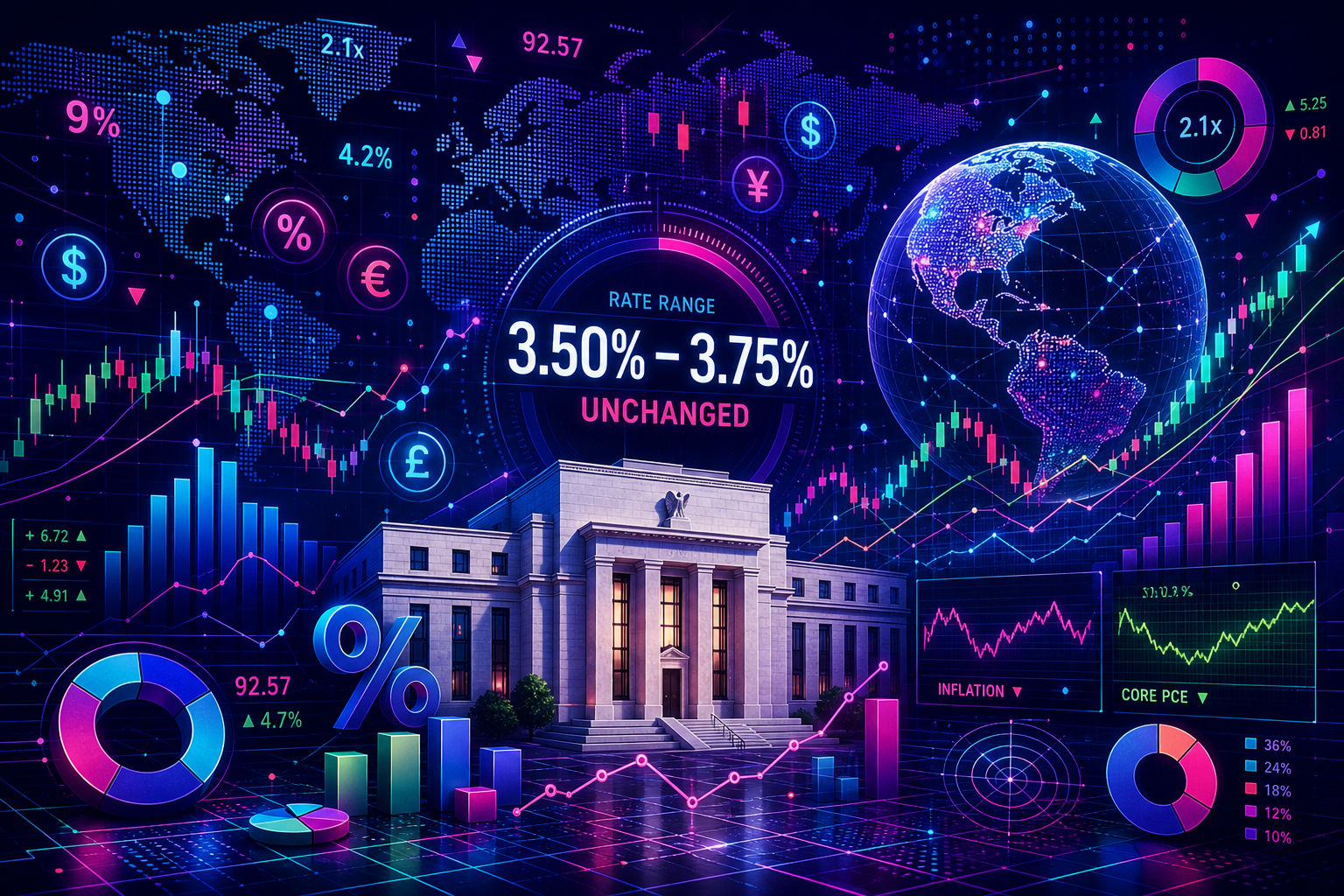
In a pivotal moment for the U.S. economy, Kevin Warsh delivered his first statement as Chairman of the Federal Reserve, confirming that the base interest rate would remain steady at 3.5% to 3.75%. This decision, expected by market analysts, reflects both a cautious approach to current economic indicators and a steadfast commitment to ensuring price stability amidst rising inflation and geopolitical uncertainties.
Economic Landscape and Key Findings
Warsh, who stepped into the role previously held by Jerome Powell, offered an analysis of the economic landscape during his press conference. He noted, “Economic activity is expanding at a solid pace, despite elevated uncertainty that owes, in part, to the conflict in the Middle East.” His remarks encapsulated several critical aspects of the current economic environment:
-
Productivity Growth: Warsh highlighted strong productivity growth and capital investment as positive signs for the economy. These indicators suggest that businesses are not only recovering but also preparing for future expansions.
-
Job Gains: The labor market remains robust, with job gains keeping pace with workforce growth. The unemployment rate, currently at 4.3%, holds steady—a figure that many economists consider healthy enough to avoid drastic policy shifts.
Despite these encouraging signs, Warsh did not shy away from addressing the inflationary pressures that have become a significant concern for consumers and policymakers alike. He candidly stated, “Persistently high prices are a burden for the American people,” underscoring the Fed's responsibility to navigate these challenges effectively.
The Significance of Price Stability
In a bold declaration, Warsh emphasized the Fed's unwavering commitment to price stability, stating, “This committee will deliver price stability.” His assurance comes at a time when inflation, exacerbated by geopolitical tensions in the Middle East, continues to exceed the Federal Open Market Committee's (FOMC) target of 2%. The latest Consumer Price Index (CPI) report from the Bureau of Labor Statistics revealed an increase of 4.2% in the all-items index, indicating that inflationary pressures are far from alleviated.
Warsh's focus on price stability is particularly crucial given the political landscape. With inflation becoming a political lightning rod, his words serve to reassure markets and the public that the Fed remains committed to its core mandate. The commitment to price stability can be seen as an attempt to build credibility and restore trust in the central bank's ability to manage inflation, especially in light of the political scrutiny surrounding its decisions.
Political Pressures and the Independence of the Fed
One of the most pressing concerns during Warsh's initial tenure will be maintaining the Federal Reserve's independence. In the months leading up to his appointment, the Fed faced unprecedented political pressure from the Trump administration, which openly criticized Powell and hinted at potential firings if rates were not lowered. This backdrop adds a layer of complexity to Warsh's leadership, as many analysts and political observers will be closely watching to see if he can navigate these turbulent waters without succumbing to external influences.
Warsh’s previous experience as a Fed governor under Chairman Ben Bernanke from 2006 to 2011 reinforces his credentials, but it also raises questions about how he will manage the delicate balance of independence. In his opening remarks, he acknowledged the “rigorous debate, open-mindedness, commitment to mission, responsibility, and accountability for performance” that defines the Federal Reserve’s traditions. This statement could be interpreted as a pledge to uphold these values during his leadership.
Future Directions: Communication Strategies and Economic Projections
As Warsh embarks on his new role, changes in communication strategies at the Fed may be on the horizon. Analysts like John Canavan from Oxford Economics speculate that Warsh might favor a “less-is-more” approach regarding post-meeting press conferences. This shift could signal a departure from the current emphasis on forward guidance—a strategy that some Fed officials argue may constrain the bank’s ability to respond to changing economic conditions.
The dot plot, which illustrates policymakers’ projections for short-term rates, was another focal point during the meeting. Interestingly, Warsh abstained from participating in this particular projection, hinting at his intention to break away from conventional practices that may limit the Fed's flexibility. His comments on forward guidance reflect a growing sentiment among some Fed officials that this practice might tie the bank to predetermined paths, which could hinder its responsiveness to economic shifts.
Broader Implications for Monetary Policy
In the longer term, Warsh's dovish views on monetary policy could shape the Fed's trajectory. While the current economic indicators do not support immediate rate cuts, there are signs that Warsh's appointment may pave the way for more accommodative policies in the future. His bullish outlook on the economy, particularly regarding advancements in artificial intelligence, suggests he believes in the potential for significant productivity gains that could ultimately support lower inflation.
Moreover, the Fed's ongoing discussions about reducing its balance sheet could further influence financial conditions and open the door for future cuts. As the Fed navigates these complexities, Warsh's leadership will be crucial in guiding the institution through potential economic turbulence.
Conclusion
As Kevin Warsh assumes the chairmanship of the Federal Reserve, his commitment to maintaining price stability and navigating political pressures will be closely scrutinized. His inaugural meeting has set a tone of cautious optimism, acknowledging current economic challenges while emphasizing the Fed's dedication to its core mandate.
In an environment marked by uncertainty, geopolitical tensions, and inflationary pressures, Warsh’s leadership will play a pivotal role in shaping the future of U.S. monetary policy. As markets digest his words and the implications of his leadership style unfold, the broader economic landscape will undoubtedly continue to evolve, reflecting the intricate interplay between monetary policy, political pressures, and global events.
In the coming months, all eyes will remain on the Fed as it navigates these challenges, striving to balance economic growth with the pressing need for price stability in an ever-changing world.








No comments yet. Be the first to share your thoughts!