




The Federal Reserve's Balancing Act
The Federal Reserve (Fed) operates under a dual mandate: to promote maximum employment while maintaining price stability, specifically targeting an inflation rate of 2%. Achieving this balance is no small feat, especially as the central bank navigates various economic currents that can impact consumers and businesses alike.
At the heart of this challenge is the Federal Open Market Committee (FOMC), which is tasked with setting the U.S. interest rate. Recent discussions among economists have highlighted a potential "doom loop" stemming from the Fed's approach to interest rate hikes and their ripple effects on the housing market. According to Torsten Slok, chief economist at Apollo Global Management, this cycle could exacerbate inflationary pressures, particularly through rising rents.
The "Doom Loop" Explained
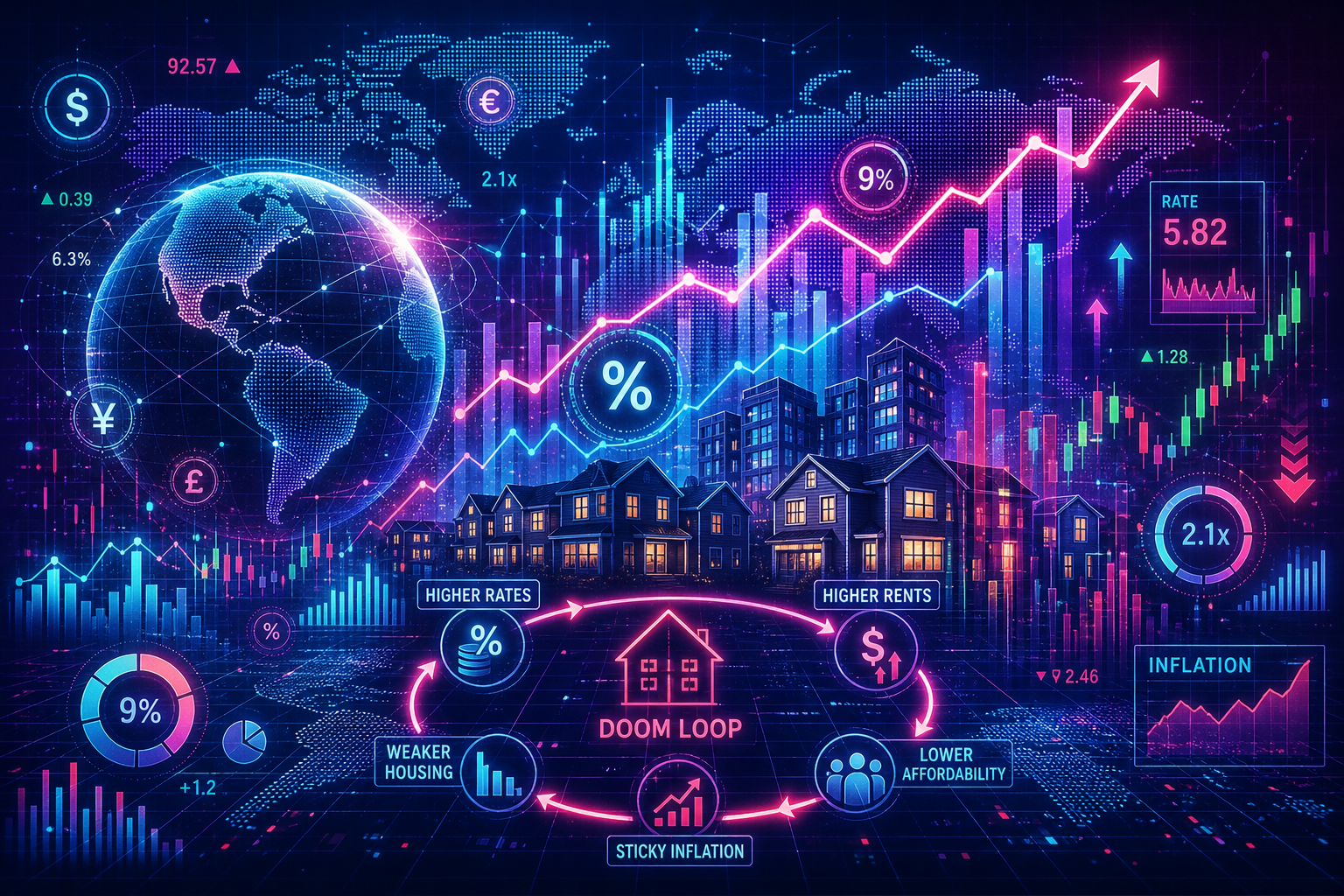
Slok's analysis reveals a troubling feedback mechanism: as the Fed raises interest rates, fewer homes and apartments are constructed due to increased borrowing costs for developers. Consequently, the decline in housing supply leads to rising rents, which in turn fuels inflation further, compelling the Fed to maintain or even raise interest rates again.
He aptly termed this phenomenon the "higher rates, higher rent doom loop." The implications are significant for the broader economy, where housing costs play a critical role in consumer spending and overall economic health.
Current Economic Landscape and Fed Actions
In September, the FOMC unanimously agreed to raise the federal funds rate by 25 basis points, bringing it to a range of 3.75% to 4%. This decision was influenced by ongoing concerns about inflation, which stood at 3.4% at the time — notably elevated given the Fed's 2% target. The committee emphasized in its statement that the policy adjustments aim to facilitate a quicker return to price stability.
While energy commodities have been a primary driver of inflation, housing costs are increasingly significant. According to the Bureau of Labor Statistics, the "owners’ equivalent rent" component of the Consumer Price Index (CPI) constitutes roughly a quarter of the overall basket. Thus, any uptick in rental prices poses a notable challenge for the Fed.
Housing Market Dynamics: Rising Costs and Construction Slowdown
The housing market is currently experiencing a confluence of pressures that further complicate the Fed's situation. On one hand, construction costs are escalating as builders compete for skilled labor, not only in traditional housing projects but also in other sectors, such as technology and artificial intelligence (AI) data centers.
Recent data from the Census Bureau indicates that privately owned housing starts dropped 2.6% in August compared to July, standing at 1,275,000 units. Moreover, completions in August reached only 1,128,000 — representing an 11.9% decrease from the previous month and a staggering 27.1% decline from the same month in the previous year. These figures paint a picture of a housing market struggling to keep pace with demand, which could further exacerbate rental inflation.
The Fed's Future Moves: What Lies Ahead?
Looking forward, financial analysts largely expect the Fed to maintain its current interest rates during the upcoming FOMC meeting. Recent labor market data, including a weaker-than-expected jobs report that added only 29,000 jobs in September, suggests that additional rate hikes could further slow down economic activity, potentially hampering job growth.
Despite this cautious approach, many analysts predict that interest rates will continue to trend upward in the long term. This sentiment is supported by elevated yields on longer-dated U.S. Treasuries and the Fed's own communication regarding persistent inflationary pressures.
Insights from Financial Analysts
Bank of America's global economists, Claudio Irigoyen and Antonio Gabriel, pointed out that the fundamentals indicate a likelihood of higher rates. They noted that underlying inflation remains above 2.5%, job growth continues to outpace breakeven levels, and there is a robust growth outlook for consumption and investment. These factors will likely keep the Fed on a path of cautious tightening.
Similarly, UBS U.S. economist Andrew Dubinsky suggested that the Fed may hold off on further rate increases until December, particularly in light of recent comments from key Fed officials. Their more measured stance on additional tightening, combined with favorable inflation data, has led to a slight easing in expectations for future rate hikes.
Broader Implications of the Fed's Dilemma
The Fed's predicament is not merely an academic exercise; it has real-world implications for millions of Americans. Rising rents can lead to increased financial strain on households, particularly those already struggling to make ends meet. As housing costs consume a larger share of household budgets, discretionary spending may decline, which can further slow economic growth.
The potential for a "doom loop" in the housing market raises important questions regarding the effectiveness of traditional monetary policy in addressing contemporary economic challenges. As the Fed grapples with these complexities, it must consider innovative strategies to mitigate the adverse effects of its rate hikes without compromising its inflation goals.
Conclusion: Navigating Uncertain Waters
As the Federal Reserve navigates the turbulent waters of economic policy, the interplay between interest rates and housing costs will remain a focal point of discussion among economists and policymakers. The "doom loop" phenomenon articulated by Torsten Slok serves as a stark reminder of the interconnectedness of financial systems and the real economy.
In the coming months, observers will be closely watching the Fed's actions and the broader economic indicators to gauge whether the central bank can successfully achieve its dual mandate without triggering further inflationary pressures or stifling job growth. The stakes are high, and the outcomes will undoubtedly shape the financial landscape for years to come.







No comments yet. Be the first to share your thoughts!