





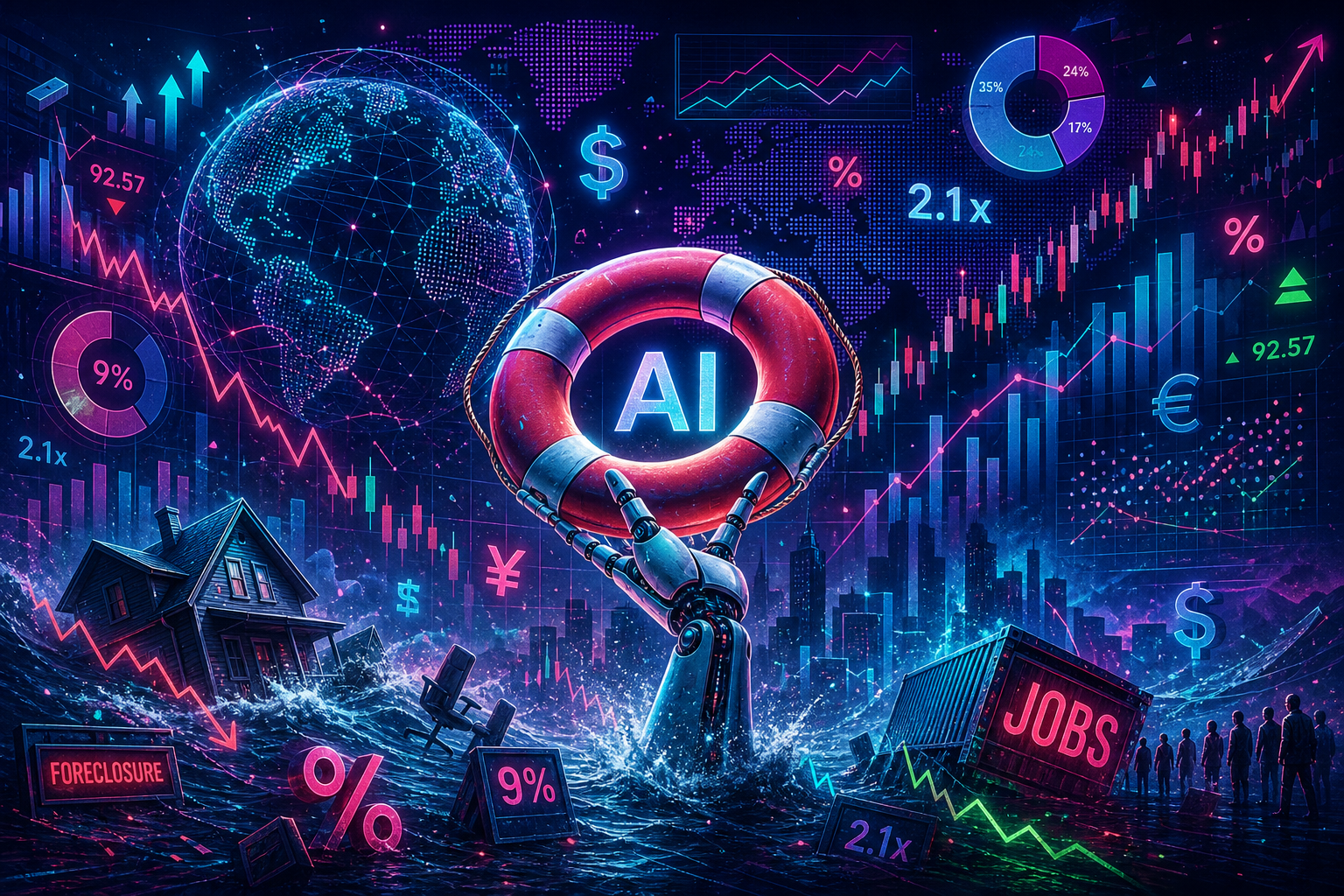
The Current Economic Landscape: A Fragile Illusion
In the age of rapid technological advancement, particularly with the rise of artificial intelligence (AI), the U.S. economy finds itself at a critical juncture. Current market valuations are reminiscent of the late 1990s—an era marked by the dot-com boom and subsequent bust. However, unlike the tech frenzy of yesteryear, the underlying economic indicators today paint a much less optimistic picture.
With consumer sentiment near historic lows, a housing market showing signs of stagnation, and job growth that is considerably weaker compared to the late '90s, the question looms: is AI the sole pillar propping up an otherwise faltering economy?
Valuations Riding on AI
To understand the current market dynamics, it’s essential to examine the valuations being driven primarily by AI infrastructure spending. According to recent reports, key sectors benefiting from this trend include technology, healthcare, and energy. Companies in these areas are experiencing significant upticks in stock prices, largely attributed to the growing integration of AI into their operations.
In 1999, the excitement surrounding internet stocks led to inflated valuations driven by speculative investments. Fast forward to today, and we see similar patterns emerging, albeit with a crucial difference: AI has tangible applications that are already transforming industries.
The AI Boom: A Double-Edged Sword
While AI has revolutionized various sectors—enabling efficiencies and fostering innovation—it also contributes to an economic narrative that could be misleading. The enthusiasm for AI has led to a surge in stock prices, making it appear as if the overall economy is thriving. However, this growth is predominantly concentrated in specific sectors, rather than being broadly supported by robust economic fundamentals.
Consumer Sentiment: A Cautionary Tale
Despite the gleaming headlines about AI and tech stocks, consumer sentiment tells a far different story. Currently, consumer confidence is at its lowest levels for decades, influenced by several factors:
- Persistent Inflation: Rising prices have eroded purchasing power, causing consumers to rethink their spending habits.
- Savings Rates Plummeting: With savings rates at multi-decade lows, many consumers find themselves living paycheck to paycheck.
- Weak Job Growth: Unlike 1999 when job growth was robust, the current labor market is marked by anemic job creation, leading to uncertainty and decreased consumer spending.
These factors indicate that the average American is not experiencing the benefits of an AI-driven economy, raising concerns about the sustainability of current market valuations.
Housing Market: Signs of Stagnation
The U.S. housing market is another area that is struggling to keep pace with the buoyant stock valuations driven by AI. Housing activity has been moribund, with home sales declining and prices stabilizing or even dropping in some regions.
The Impact of Higher Interest Rates
Rising interest rates have played a significant role in dampening housing activity. With the Federal Reserve continuously adjusting rates in an attempt to combat inflation, mortgage rates have surged, making home purchasing increasingly difficult for many. This situation has resulted in:
- Decreased Demand: Many potential homebuyers are being priced out of the market.
- Stagnant Prices: Home prices are failing to appreciate, which could lead to broader implications for the economy since housing often serves as a wealth indicator.
The stagnation in housing not only affects individual homeowners but also has ripple effects on related industries, such as construction and retail, further complicating the economic landscape.
Investment Strategies in a Divergent Economy
In light of these economic indicators, investors are adopting a conservative stance. Many are overweight in cash, short-term Treasuries, and covered calls while largely avoiding sectors like consumer goods, hospitality, and housing. Instead, they are favoring:
- Energy: With ongoing geopolitical tensions and supply chain disruptions, energy stocks have gained traction.
- Healthcare/Biotech: The ongoing demand for healthcare solutions, particularly in the wake of the pandemic, continues to drive investment in this sector.
- Precious Metals: Investors view gold and silver as safe havens amidst economic uncertainty.
This conservative portfolio positioning reflects a cautious outlook among investors who are wary of overexposure to a market that may not have a solid foundation.
A Broader Perspective: The Future of the U.S. Economy
The current economic climate raises critical questions about the sustainability of growth driven primarily by AI. While the technology offers immense potential, it cannot be viewed in isolation from the broader economic context.
The Need for a Balanced Approach
To foster a more balanced economic growth trajectory, policymakers and business leaders must recognize the limitations of an AI-centric approach. Here are a few strategies that could help:
- Investing in Human Capital: As AI continues to automate tasks, there is a pressing need for workforce reskilling and education to ensure that workers can adapt to changing job requirements.
- Stimulating Consumer Confidence: Measures aimed at bolstering consumer confidence—such as addressing inflation and improving job growth—are essential for a robust recovery.
- Diversifying Economic Focus: Rather than relying solely on AI, a diversified economic strategy that includes support for various industries could lead to more sustainable growth.
The Road Ahead
As we navigate this complex landscape, it is essential to remain vigilant and critical of the economic narratives being presented. The AI boom may offer exciting opportunities, but it should not overshadow the fundamental challenges facing the U.S. economy.
Investors, policymakers, and consumers alike must work together to address the underlying issues that threaten to undermine long-term economic stability. Balancing the excitement surrounding AI with a clear-eyed assessment of economic realities will be crucial as we look ahead.
Conclusion: Can AI Save Us?
The question remains: can AI truly save the U.S. economy? While it has the potential to drive transformation and efficiency, it is not a panacea for the broader issues at play. Without addressing the weaknesses in the housing market, job growth, and consumer sentiment, the current economic recovery may prove to be more fragile than it appears.
As we continue to witness the interplay between technology and the economy, a balanced approach that recognizes both the opportunities and challenges will be essential for navigating the road ahead.








No comments yet. Be the first to share your thoughts!