




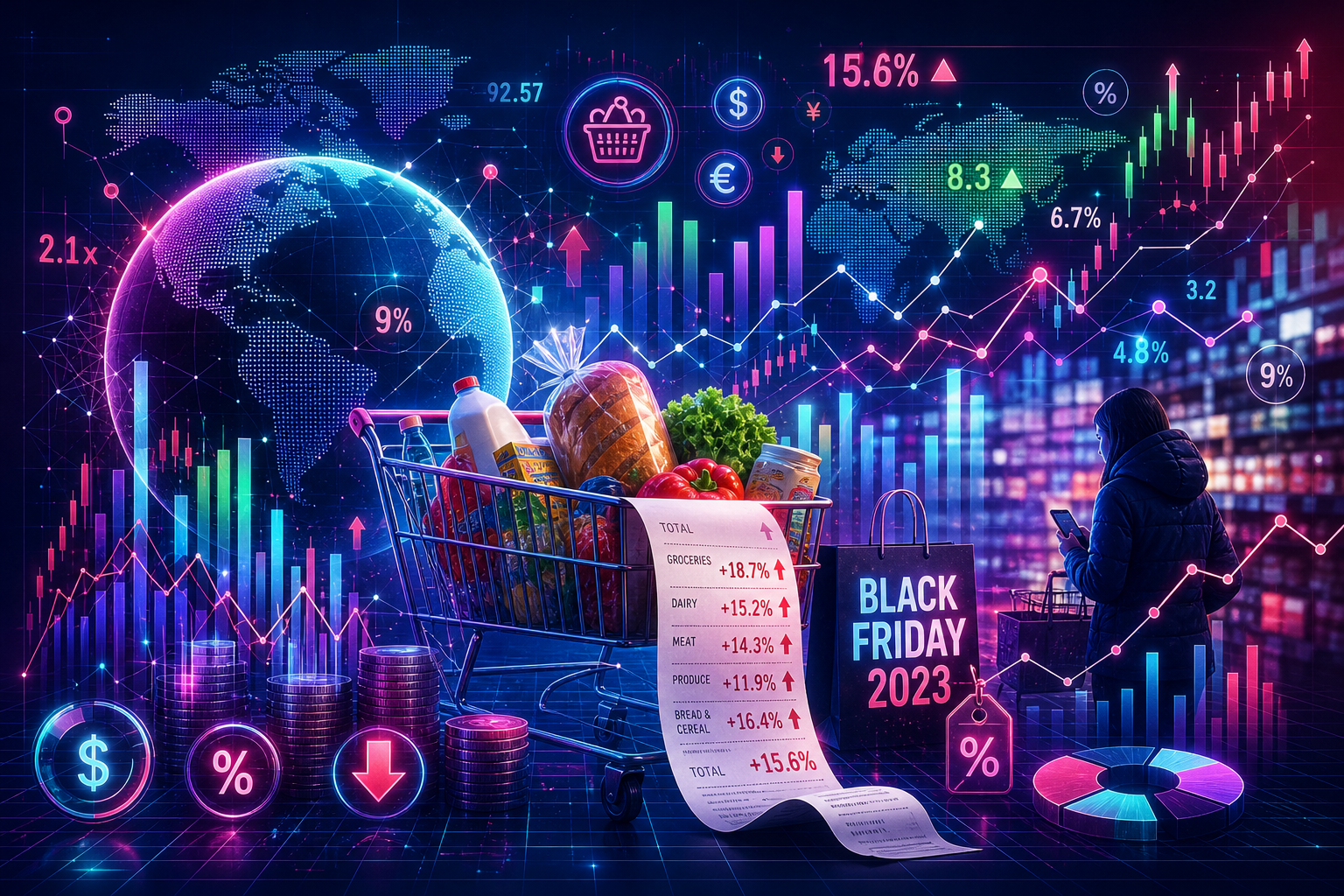
As the holiday shopping season kicks off with Black Friday 2023, the landscape of consumer spending is starkly different from previous years. The National Retail Federation (NRF) anticipates that about 126 million Americans will participate in Black Friday shopping this year, part of a broader estimate of 182.7 million planning to shop over the Thanksgiving weekend. Yet, contrary to the bustling shopping scenes of past years, many of these consumers are stepping out with less to spend, a consequence of rising grocery bills and persistent inflation.
The Shifting Spending Landscape
Recent findings from market research firm Drive Research reveal that 68% of Black Friday shoppers who are scaling back their spending this year cite rising grocery costs as a primary reason. This figure represents a notable increase from 57% in 2022. The survey, which polled 1,405 U.S. adults from October 6 to October 9, indicates that other factors contributing to reduced holiday budgets include:
- 76% citing rising living costs (up from 70% in 2022)
- 61% attributing their cutbacks to inflation (up from 54% in 2022)
As a result, Black Friday budgets are shrinking, with 41% of shoppers planning to spend less on holiday shopping compared to last year, a significant rise from 31% in 2022. The number of those expecting to spend $1,000 or more has dropped to 18%, down from 24% in the previous year, while 34% feel pressured to spend more than they can comfortably afford.
Everyday Essentials Take Priority
In light of these financial constraints, consumers are prioritizing everyday essentials alongside their holiday purchases. According to the survey, 38% of in-person Black Friday shoppers and 31% of online shoppers plan to buy household necessities such as groceries and cleaning supplies. This shift underscores a significant change in consumer priorities, as many are forced to balance the joy of holiday giving with the practicalities of everyday living.
The Impact of Rising Grocery Prices
The data reflects a broader trend affecting American households. In October, grocery prices saw a 0.4% increase, the largest monthly rise since April, according to the Bureau of Labor Statistics (BLS). Specific staples, like beef, experienced an even steeper increase of 0.9%. Over the past year, food-at-home prices have climbed by 1.8%, while overall consumer prices rose by 3.7%.
Gasoline prices have also played a significant role in the inflation narrative, soaring by 37.4% year-over-year in October, which has further strained household budgets. The BLS's inability to publish year-over-year comparisons for October due to data collection issues during the government shutdown adds another layer of uncertainty to the economic landscape.
Federal Reserve's Response
The Federal Reserve is closely monitoring these trends, with officials expressing concerns over inflation. Michelle Bowman, the Fed’s vice chair for supervision, acknowledged in a recent speech that while the labor market had improved beyond expectations, the progress in reducing inflation had fallen short. The Fed maintained its benchmark interest rate in a range of 3.75% to 4% during its October meeting, indicating a cautious approach to monetary policy amidst fluctuating economic indicators.
Retailers Face New Challenges
As consumers adjust their spending habits, retailers must navigate a challenging environment. Walmart, a leading destination for Black Friday shopping, is expected to attract 71% of in-person shoppers this year—unchanged from 2022. According to Emily Rodgers, Walmart’s director of marketing, when budgets tighten, consumers gravitate towards trusted retailers known for lower prices. However, rising operational costs are complicating efforts to keep prices down. Walmart’s CEO, John Furner, noted that increased diesel and transportation expenses have incurred an additional $2 billion in costs this year, potentially impacting pricing strategies during the holiday season.
Skepticism Around Black Friday Deals
Amidst rising prices and budget constraints, consumer skepticism about Black Friday deals has also intensified. Drive Research found that 64% of Black Friday shoppers believe retailers inflate prices ahead of sales to create the illusion of discounts. Furthermore, 72% feel that the quality of deals has diminished compared to previous years. As Rodgers aptly put it, “Black Friday used to sell itself on the date alone. Now shoppers show up with a price tracker in one hand and a healthy dose of doubt in the other.”
To win over skeptical consumers, retailers may need to adopt transparency in their pricing strategies, clearly outlining past prices and the actual savings during sales.
Consumer Strategies for Managing Holiday Costs
Faced with economic pressure, consumers are taking proactive steps to manage their holiday spending. According to a survey by the NRF, 82% of consumers are implementing strategies to cut costs, including:
- 25% opting for less expensive gifts
- 24% cutting back in other areas of their budgets
- 20% reducing the number of people they buy gifts for
These adjustments reflect a marked shift in consumer behavior, indicating that many individuals are reassessing their holiday spending in light of financial realities.
Broader Implications for the Economy
The implications of these trends extend beyond individual shopping habits; they signal a broader economic shift. As inflation continues to squeeze household budgets, the retail sector may face challenges that could affect overall economic growth. Retailers must adapt quickly to changing consumer demands and preferences, balancing the need for competitive pricing with their own rising costs.
Moreover, the impact of inflation is likely to influence consumer sentiment, potentially leading to a more cautious approach to spending well into the new year. As households prioritize essentials over discretionary spending, sectors reliant on robust consumer spending may experience slower growth.
Conclusion: Navigating the New Normal
As Black Friday 2023 unfolds amidst inflationary pressure and rising grocery costs, both consumers and retailers must navigate a new economic landscape. Shoppers are tightening their budgets, focusing on essentials, and expressing skepticism about holiday deals. Retailers, in turn, are challenged to maintain low prices while managing rising operational costs.
The data and trends emerging from this year's Black Friday reveal a complex interplay of economic factors that will likely shape consumer behavior and retail strategies in the months ahead. As we move further into the holiday season, understanding these dynamics will be crucial for all stakeholders in the economy.
In a world where inflation looms large, both consumers and retailers must adapt, innovate, and remain vigilant to thrive in this evolving marketplace.








No comments yet. Be the first to share your thoughts!