





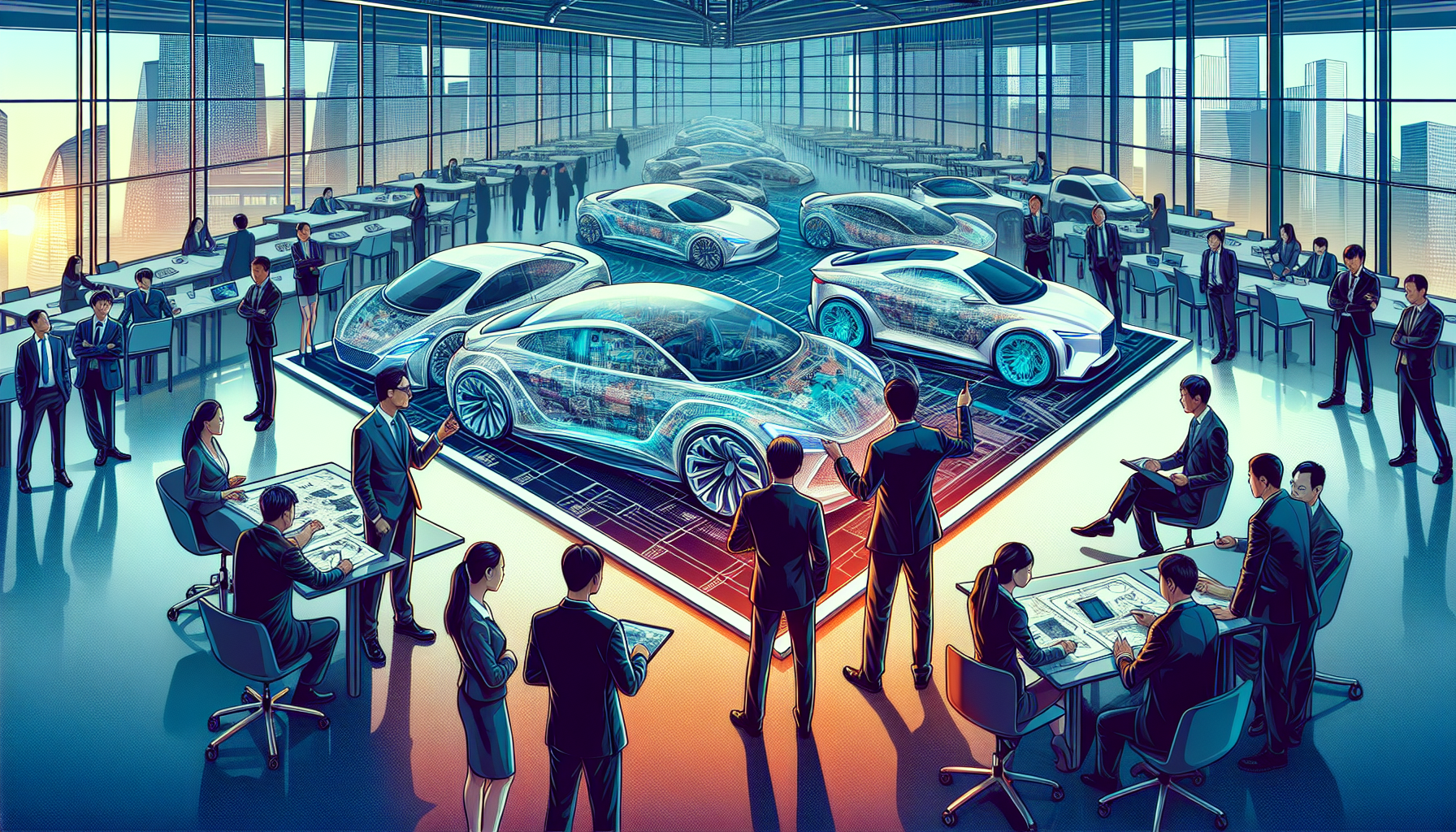
The automotive industry in China, the largest car market in the world, is undergoing a seismic shift. Following a period of unprecedented growth, foreign car manufacturers have witnessed a dramatic sales slump — in some cases, down by nearly two-thirds — since the pandemic struck. As competition intensifies particularly from domestic brands, these companies are now betting on advanced technology and innovative strategies to reclaim their foothold.
The Current Landscape: A Decline in Sales
Chinese consumers have increasingly favored homegrown brands, which offer competitive pricing, cutting-edge technology, and features tailored to local preferences. For instance, data compiled by CNBC shows that sales for major foreign brands like Nissan fell by a staggering 47% in March compared to the same month in 2019. Cadillac experienced a similar downturn with a 39% drop. This decline has prompted foreign automakers to rethink their strategies, particularly at events like the recent Beijing Auto Show, where they showcased an array of new models designed to appeal to the evolving tastes of Chinese consumers.
A New Wave of Innovation: Technology Integration
In a bid to win back buyers, foreign automakers have started to embrace Chinese technology. Cadillac made headlines with the unveiling of the VISTIQ, its first electric SUV equipped with advanced driver-assist technology, co-developed with Chinese startup Momenta. Priced between 468,000 yuan ($68,000) and 508,800 yuan, the vehicle promises features for both highway and city driving, including automatic parking. This strategic shift allows Cadillac to cut production time significantly, down to 18 months, and compete more effectively against local rivals.
Hyundai is also making significant inroads with the launch of its all-electric IONIQ brand in China. José Muñoz, president and CEO of Hyundai Motor Company, emphasized the importance of this move, stating, "China is where the future of mobility is being defined." The new IONIQ V features driver-assist technology co-developed with Momenta and utilizes Qualcomm's Snapdragon 8295 chipset for AI voice control. If successful, Hyundai plans to expand this brand to other regions, including the Asia-Pacific, Australia, and the Middle East.
Competition and Collaboration: The Role of Local Partnerships
The rising competition necessitates that foreign automakers not only innovate but also adapt to local market conditions. Stephen Dyer, partner and managing director of AlixPartners, notes that the incorporation of Chinese technology reflects a recognition of local expertise. While he expresses skepticism about foreign brands regaining significant market share, he acknowledges the potential for these companies to leverage Chinese advancements in their home markets.
Volkswagen, another heavyweight in the automotive sector, is also ramping up its efforts. The company announced plans to roll out AI-powered voice command technology in its vehicles, developed in collaboration with tech giants such as Tencent, Alibaba, and Baidu. This technology aims to create an interactive experience for drivers, enhancing user engagement and satisfaction.
The Importance of Fresh Offerings
As competition heats up, maintaining a fresh and diverse vehicle lineup is crucial. With an average of 10 to 15 new car launches occurring monthly in China, automakers are under pressure to continuously innovate. Ivan Espinosa, CEO of Nissan, highlights the importance of established dealer networks and customer relationships in this competitive landscape. Nissan plans to introduce five new energy vehicles over the next year, utilizing plug-in electric technology to attract environmentally conscious consumers.
Future Outlook: What Lies Ahead for Foreign Automakers?
While foreign automakers are making strides to adapt, the question remains: can they recover lost ground against formidable domestic competitors? BYD, for example, has emerged as a market leader, recording nearly 689,000 sales in the first quarter of 2026 alone, despite a 30% drop compared to the previous year. The company sold over 2.26 million battery-powered vehicles globally in 2022, surpassing Tesla's 1.64 million.
The growing consumer preference for local brands, combined with government policies favoring domestic production, poses challenges for foreign companies. However, the integration of Chinese technology into their offerings presents a unique opportunity for these automakers to enhance their appeal.
Broader Implications for the Global Auto Industry
The strategic shifts taking place in China have broader implications for the global automotive landscape. The rise of electric vehicles (EVs) and advanced driver-assist technologies is not just a trend in China; it is reflective of a global movement toward sustainable and intelligent mobility solutions. As foreign automakers collaborate with Chinese tech firms, they may create pathways for technological advancements to permeate their home markets, fundamentally altering the global automotive ecosystem.
Moreover, the increased competition in China is likely to accelerate innovation. As foreign brands adapt to local preferences, they may introduce superior technologies and features that could set new standards in automotive design and functionality. This could lead to a race for innovation that benefits consumers worldwide.
Conclusion: A New Era for Foreign Automakers in China
Foreign automakers are at a pivotal juncture in the Chinese automotive market. The integration of local technology, innovative partnerships, and a commitment to understanding consumer preferences is crucial for regaining lost market share. While challenges remain, the potential for growth and transformation is significant. As the industry evolves, both local and foreign brands will play essential roles in shaping the future of mobility.
In summary, the ongoing competition in China is not just a battle for sales; it is a contest of innovation, adaptability, and foresight. For foreign automakers, the road ahead requires a delicate balance of leveraging local technology while staying true to their brand identity. Only time will tell whether these strategies will succeed in reclaiming their place in the world’s largest automotive market.








No comments yet. Be the first to share your thoughts!