





Understanding the PMI and Its Importance
Purchasing Managers' Index (PMI) is a critical economic indicator that provides insight into the overall health of the manufacturing and service sectors. It is derived from surveys of private sector companies, capturing data on variables such as new orders, inventory levels, production, supplier deliveries, and employment.
Typically, a PMI reading above 50 signals expansion, while a reading below 50 indicates contraction. The Flash PMI report, which is released monthly, serves as an early indicator of economic trends, enabling analysts, investors, and policymakers to gauge where the economy is headed.
Eurozone Growth: A Two-Edged Sword
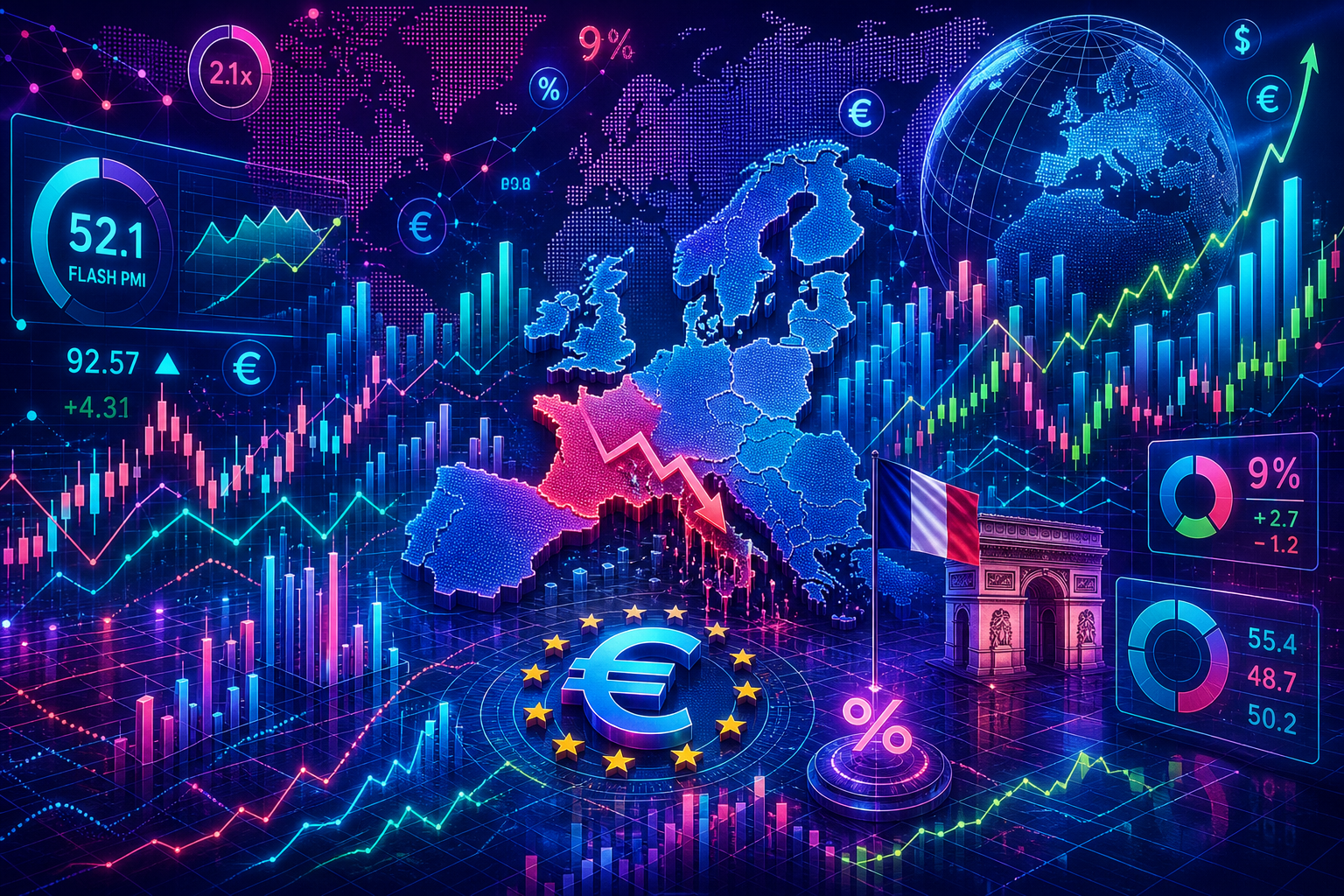
The latest Flash PMI data for October shows that the Eurozone economy continues to grow, albeit at a slower pace than in previous months. This slowdown can be attributed to various factors, with the most notable being a downturn in France, one of the region's largest economies.
Current Growth Rates
According to the preliminary PMI readings, the Eurozone is still expanding at one of the highest rates observed in the last three years. However, this growth is becoming increasingly uneven. The overall PMI for the Eurozone sits at a respectable 52.5, indicating growth, but it represents a decline from previous months, suggesting that the momentum is waning.
France's Economic Struggles
France's PMI reading has dropped significantly, indicating a notable slowdown in its economic activities. The latest figures reveal that the French economy is grappling with renewed challenges, including sluggish consumer spending, rising inflation, and supply chain disruptions.
- Consumer Spending: Households in France are tightening their belts due to elevated inflation levels, leading to decreased demand for goods and services.
- Supply Chain Issues: Ongoing disruptions have hampered production capabilities, particularly in manufacturing sectors that rely on timely deliveries of raw materials.
These issues highlight the fragility of the French economy and its potential ripple effects on the broader Eurozone.
The Inflation Factor
Inflation remains a pressing concern across the Eurozone, affecting both consumers and businesses. As of October, inflation rates have continued to climb, driven by rising energy costs, supply chain bottlenecks, and higher raw material prices.
Current Inflation Trends
- Energy Prices: The surge in energy prices has been particularly impactful, with many households experiencing a significant increase in their utility bills. This has put additional pressure on disposable incomes, further exacerbating consumer hesitancy.
- Wage Growth: While wages have been rising in many sectors, they have not kept pace with inflation, diminishing real purchasing power. This disparity is evident in many consumer sentiment surveys, which indicate growing concerns about the cost of living.
Balancing Growth and Inflation
The European Central Bank (ECB) faces a delicate balancing act as it navigates these economic conditions. Policymakers must consider how to stimulate growth while simultaneously tackling inflation. The current economic landscape has led to discussions about potential interest rate hikes and other monetary policy measures aimed at curbing inflation without stifling growth.
Broader Implications for the Eurozone Economy
The slowdown in growth and continued inflationary pressures raise several critical questions about the future economic trajectory of the Eurozone.
Economic Divergence
One of the most pressing concerns is the divergence in economic performance among Eurozone member states. Countries like Germany and the Netherlands are experiencing more robust growth compared to France, which raises questions about the overall cohesion of the Eurozone.
- Impact on Policy: Divergent growth rates complicate the ECB's policy-making process, as measures that may benefit one country could have adverse effects on another.
- Investment Climate: Investors may become increasingly cautious, favoring regions with stronger growth prospects, which could lead to capital flight from slower-growing economies.
Potential for Economic Reform
The current economic conditions may prompt calls for structural reforms across the Eurozone. Policymakers and economists are advocating for measures that could enhance productivity, improve labor market flexibility, and foster innovation.
- Labor Market Reforms: Streamlining hiring processes and reducing regulations could help stimulate job creation, particularly in sectors hit hardest by the slowdown.
- Investment in Infrastructure: Increased public investment in infrastructure projects could provide a dual benefit of stimulating immediate economic activity while enhancing long-term growth potential.
Real-World Examples: Lessons from the Past
Historically, the Eurozone has faced similar challenges, particularly during the financial crisis of 2008 and the subsequent sovereign debt crisis. The lessons learned from these periods highlight the importance of coordinated fiscal and monetary policies.
- Crisis Response: During the last crises, the ECB took unprecedented measures, including quantitative easing and negative interest rates, to stabilize the economy. These actions had mixed results and can inform current policy discussions.
- Cohesion vs. Divergence: The 2010s saw significant economic divergence within the Eurozone, with countries like Greece facing severe austerity measures while others enjoyed more stable growth. This history serves as a cautionary tale about the risks of allowing economic disparities to widen.
Looking Ahead: What’s Next for the Eurozone?
As we move deeper into the fourth quarter of 2023, the Eurozone faces a pivotal moment. The interplay between growth and inflation will be crucial in shaping the region's economic future.
Monitoring Economic Signals
Investors, analysts, and policymakers will need to keep a close eye on several economic indicators:
- PMI Trends: Continued monitoring of PMI data will provide insight into business sentiment and economic momentum.
- Inflation Rates: Weekly and monthly inflation reports will be critical in determining the ECB's next steps.
- Consumer Confidence: Surveys measuring consumer sentiment and spending habits will indicate how households are coping with rising prices.
The Role of Technology and Innovation
Amid these challenges, technology and innovation could play a significant role in revitalizing the Eurozone economy. By investing in digital transformation and green technologies, countries can enhance productivity and drive sustainable growth.
- Digital Economy: The growth of the digital economy presents unique opportunities for businesses to innovate and expand, potentially offsetting losses in traditional sectors.
- Sustainability Initiatives: Green technologies can spur job creation in emerging industries, providing a pathway for economic recovery while addressing climate change.
Conclusion: Navigating Uncertainty
The latest Flash PMI data paints a complex picture of the Eurozone economy. While it shows continued growth, the slowdown in France and persistent inflationary pressures highlight significant challenges ahead. Economic divergence among member states further complicates the landscape, necessitating coordinated and thoughtful policy responses.
As the Eurozone navigates these turbulent waters, the focus should be on fostering resilience, promoting innovation, and ensuring that growth is inclusive and sustainable. The coming months will be critical in determining whether the Eurozone can maintain its growth trajectory or succumb to the pressures of stagnation and inflation.
In the face of uncertainty, stakeholders must remain vigilant and adaptable, ready to respond to shifting economic dynamics while keeping an eye on long-term goals for stability and prosperity.








No comments yet. Be the first to share your thoughts!