




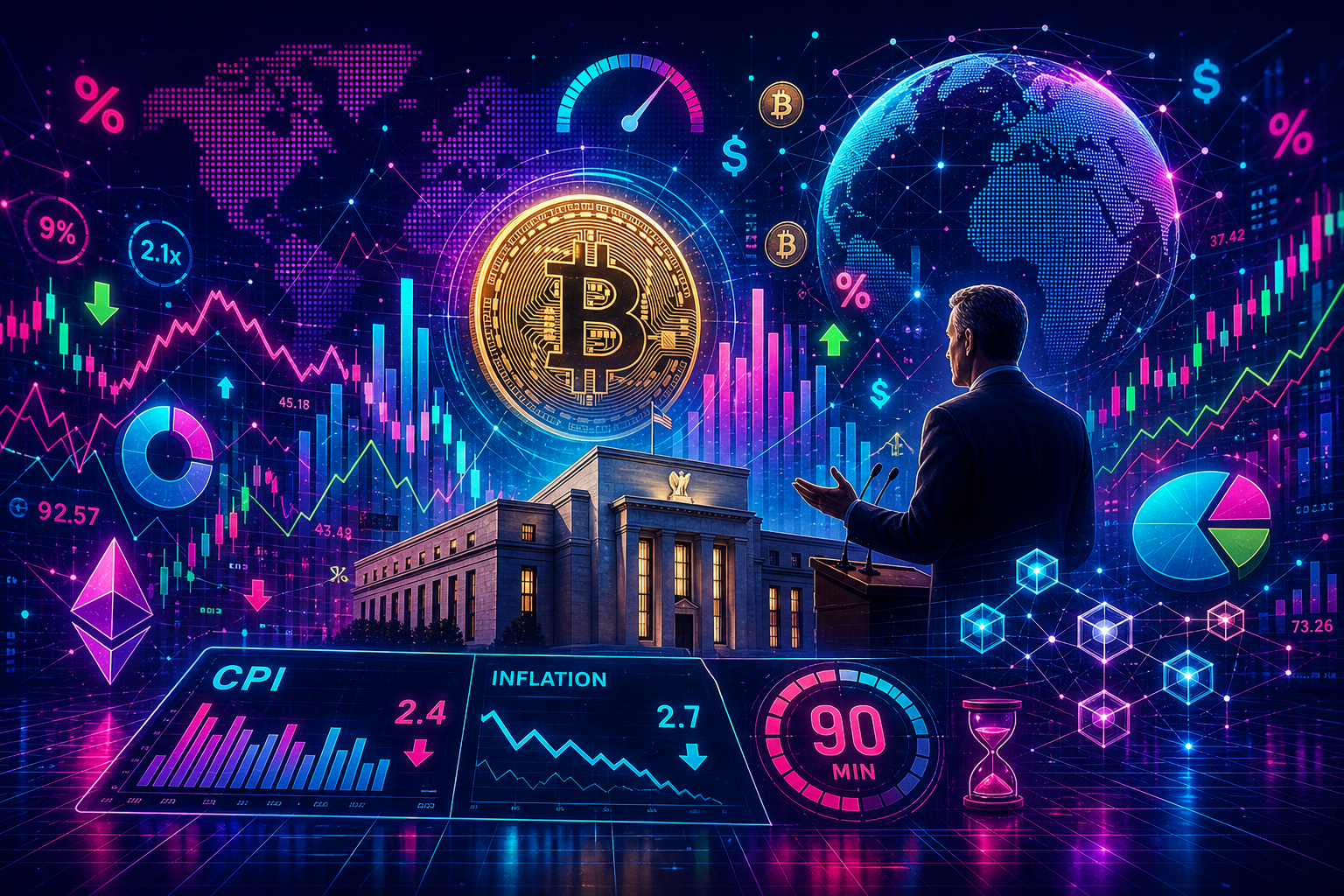
The world of cryptocurrency is no stranger to volatility, and as Bitcoin stands on the brink of potential upheaval, two significant events are set to shape its immediate future. On June 30, the U.S. Consumer Price Index (CPI) data is expected to be released, which could indicate a slowing inflation rate, directly impacting Bitcoin's trajectory. Just 90 minutes later, Federal Reserve Chair Kevin Warsh will deliver his semiannual testimony to Congress, offering insights into monetary policy that could sway market expectations for rate hikes.
The Inflation Landscape
The anticipated CPI data for June is expected to show a moderation in inflation, with estimates pointing towards a decrease to approximately 3.8% year-over-year, down from 4.2% in May. Economists predict that the monthly index will register a decline of about 0.1% to 0.2%. This improvement is largely attributed to a notable decrease in gasoline prices, which fell nearly 10% over the month, marking one of the largest monthly declines in a decade, according to BMO chief economist Douglas Porter.
The recent easing of energy prices follows geopolitical tensions which saw the Strait of Hormuz—an essential maritime route for global oil trade—reopened during a ceasefire between the U.S. and Iran. However, the situation remains precarious, as President Donald Trump has since reinstated a blockade on Iranian shipping and imposed a 20% tariff on cargo moving through the strait. This renewed tension has caused oil prices to spike, with Brent crude climbing to above $87 per barrel after starting the month near $67.
Bitcoin's Position in the Market
As the CPI data approaches, Bitcoin is trading around $62,200—a decrease of about 3% over the past 24 hours. The cryptocurrency has seen a trading range between $64,273 and $61,794, and is currently testing critical support levels near $61,700. If it breaks below this threshold, the next significant support level could be around $60,000, a psychological barrier that Bitcoin has struggled to maintain in previous downturns.
The market's reaction to the CPI data and Warsh's testimony will be crucial. Analysts are closely monitoring the potential impact on Federal Reserve policy. Money markets are currently assigning a 40% to 50% probability of a rate hike at the upcoming July meeting, a substantial increase from just 10% at the beginning of the week. This shift in expectations follows comments from Fed Governor Christopher Waller, who warned that the central bank may need to raise rates if inflation remains elevated.
Core CPI and Market Reactions
While headline CPI is expected to show improvement, core CPI—which excludes food and energy—remains stubbornly high, with estimates hovering between 2.8% and 2.9% year-over-year. The Cleveland Fed's nowcasting model suggests a core CPI of 2.85%. This persistent inflationary pressure could lead to a more hawkish stance from the Fed, which would likely tighten financial conditions and subsequently impact risk assets like Bitcoin.
The market’s reaction to Warsh’s testimony will be closely watched. He has been known to favor a more nuanced approach to monetary policy, having streamlined the Fed's communication strategy by reducing the FOMC statement and removing forward guidance. Thus, his insights could provide valuable clues about the Fed's future direction.
Should Warsh interpret the CPI data as a sign of progress, it might provide cover for the Fed to hold rates steady in July. Conversely, if he emphasizes the risks posed by rising core inflation and oil prices—currently above $85 per barrel—Bitcoin could face additional headwinds.
The Broader Implications for Bitcoin
The implications of these economic indicators on Bitcoin cannot be overstated. The cryptocurrency market is particularly sensitive to changes in interest rate expectations, as rising rates tend to attract capital toward traditional assets, decreasing demand for riskier investments like Bitcoin.
Moreover, the recent geopolitical tensions surrounding oil prices and the Strait of Hormuz could further complicate the landscape. With oil nearing $80 a barrel and Polymarket odds suggesting only a 3% chance of normalizing trade routes by the end of July, market sentiment around Bitcoin could be negatively affected.
Historically, Bitcoin has reacted sharply to macroeconomic news. For instance, during periods of heightened inflation or economic uncertainty, the cryptocurrency often serves as a hedge, attracting investors seeking to preserve value. However, the current environment of rising interest rates and geopolitical instability poses a significant challenge to this narrative.
Recent Market Trends and Outflows
Adding to the uncertainty, the cryptocurrency market has seen a notable decline in risk appetite, with Bitcoin exchange-traded funds (ETFs) recording $424.7 million in net outflows on one recent Monday. This trend reflects a growing cautiousness among investors amid rising yields and potential Federal Reserve tightening.
As the market anticipates Warsh's testimony, the prevailing sentiment is one of caution. If Bitcoin can reclaim the $64,000 mark and hold it as support, it could signal a relief rally. However, a dip below $61,700 would likely trigger further selling pressure, bringing the $60,000 support level into play.
Conclusion
In summary, Bitcoin is facing a crucial test as it navigates the convergence of CPI data and Federal Reserve testimony. The expected cooling of inflation could provide a temporary reprieve; however, the overarching concern of a more hawkish Fed looms large. Investors are urged to remain vigilant, as the interplay between these economic indicators and Bitcoin's market dynamics will determine its near-term trajectory.
As the financial landscape continues to evolve, the implications of these events extend beyond Bitcoin, affecting broader market trends and investor sentiment. In a world where economic data can shift market sentiment in an instant, the coming days will be pivotal in shaping the future of both Bitcoin and the broader cryptocurrency market.








No comments yet. Be the first to share your thoughts!