




Bitcoin's Surge: A Response to Easing Inflation
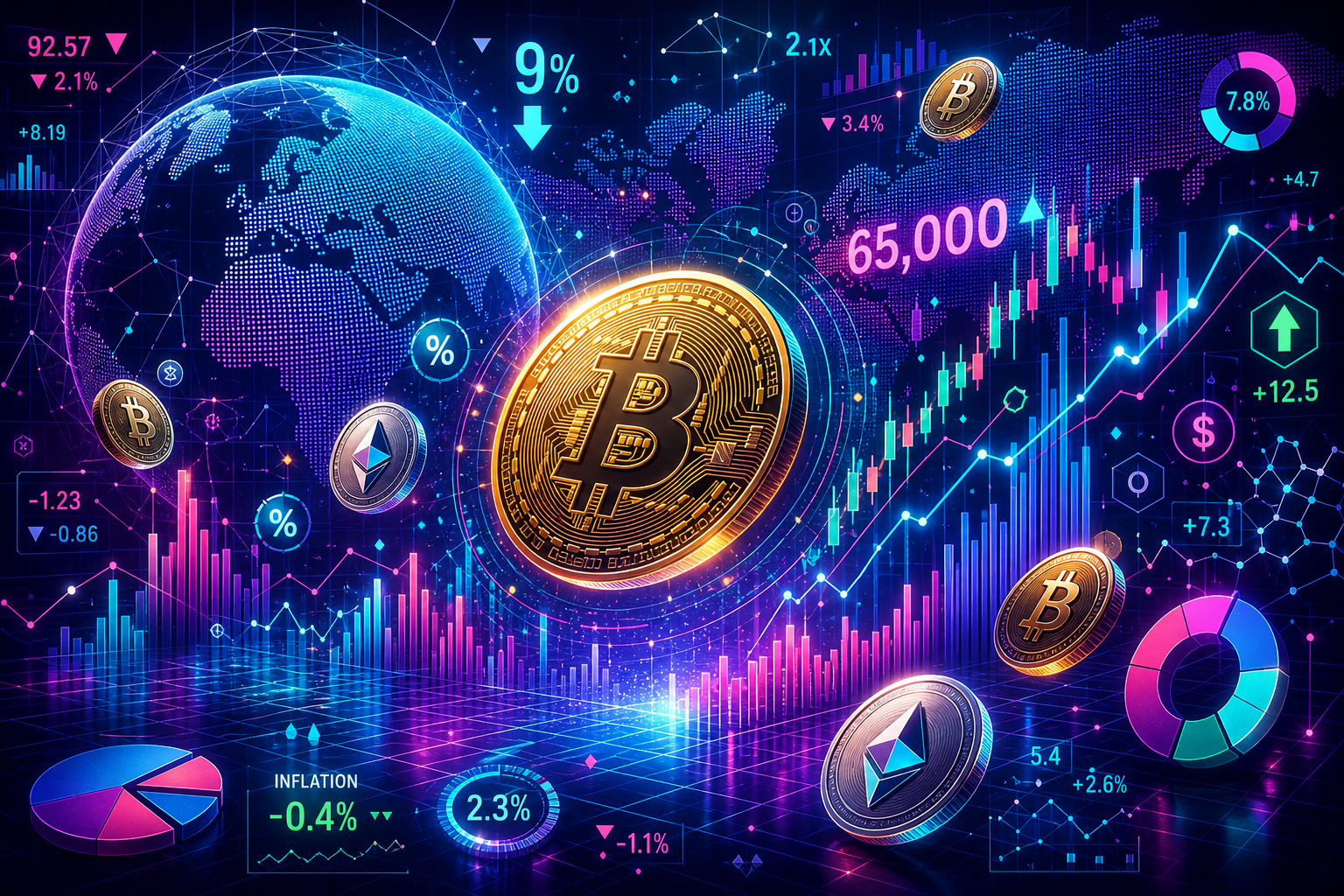
On July 14, Bitcoin approached the $65,000 mark, driven by a surprising 0.4% decline in the Consumer Price Index (CPI) for June. This drop marked the largest monthly decline since April 2020, leading many investors to believe that inflationary pressures might be diminishing. The annual inflation rate fell to 3.5%, down from 4.2% in May, and significantly below the expected 3.8%. This unexpected data not only lifted Bitcoin's price but also provided a temporary boost to risk assets across the market.
Investors reacted positively, with Bitcoin climbing as high as $64,832, a gain of approximately 4% from its daily low. This response underscores Bitcoin's sensitivity to macroeconomic indicators, particularly those related to inflation and interest rates.
Contextualizing the CPI Report
The CPI report indicated a slowdown in inflation, raising hopes that the Federal Reserve might reconsider its aggressive stance on interest rate hikes. Core CPI, which excludes volatile food and energy prices, remained stable, increasing by just 2.6% year-over-year, also below expectations. Jake Kennis, a senior research analyst at Nansen, pointed out that while the CPI showed an improvement, it did not conclusively signal a sustained downward trend in inflation.
“The softness was led largely by energy, which eases near-term pressure on the Fed heading into the July FOMC and helped risk assets bid,” Kennis noted, cautioning that this was more a temporary respite than a confirmation of long-term disinflation.
The Energy Market's Role in Inflation Dynamics
A significant factor behind the CPI's decline was a 5.7% drop in energy prices, including a notable 9.7% decline in gasoline costs. These decreases were largely attributed to a temporary easing in crude oil prices, driven by a diplomatic agreement between the United States and Iran, which raised hopes for a reduction in geopolitical tensions affecting oil supply.
However, this reprieve has proven fleeting. Following renewed tensions, including missile attacks by Iran against U.S. allies, oil prices rebounded sharply. As of July 14, Brent crude was trading above $87 per barrel before settling near $85. West Texas Intermediate (WTI) also saw a rise, reaching an intraday high of $80.53.
Patrick De Haan, head of petroleum analysis at GasBuddy, emphasized that the CPI report reflects past prices rather than current market realities. "The recent escalation in tensions has pushed crude and retail fuel costs higher, raising the specter of renewed inflation," he warned, suggesting that upcoming inflation reports could reflect these higher energy prices.
The Implications for Bitcoin
As Bitcoin attempted to break through the $65,000 resistance level, the potential for rising oil prices loomed large. A continued spike in crude costs could rekindle inflation fears and influence the Federal Reserve’s monetary policy decisions, complicating Bitcoin's path forward.
Federal Reserve officials, including Chairman Kevin Warsh, have acknowledged the volatility in monthly price fluctuations, stressing the importance of maintaining a steady hand in monetary policy. Warsh reaffirmed the Fed's commitment to combating inflation, stating, "Our number one objective is to get monetary policy right... If we get policy right—and we will—the inflation surge of the last five years will be a thing of the past."
Market Reactions and Investor Sentiment
The response from Bitcoin investors has been noteworthy. After the CPI report, Bitcoin held above the critical $62,000 mark despite geopolitical uncertainties. Data from Santiment indicated that significant Bitcoin holders, often referred to as "whales," have been accumulating Bitcoin, purchasing approximately 11,000 BTC within a week. This accumulation suggests a bullish sentiment among larger investors, which could provide support for Bitcoin prices amid volatility.
Lacie Zhang, a research analyst at Bitget, noted that the CPI report acted as a catalyst for Bitcoin's recent upward movement. However, she cautioned that the renewed tensions in the Strait of Hormuz could reverse this advance. Zhang identified a critical support zone between $62,000 and $63,000 and emphasized the need for Bitcoin to break through the $65,000-$66,000 resistance area for a sustained rally.
The Road Ahead: Risks and Opportunities
While the recent CPI report provided a temporary boost to Bitcoin, several factors could hinder its progress. The potential for renewed energy price shocks poses a significant risk, as rising costs could elevate inflation expectations and prompt the Fed to maintain or even raise interest rates.
Moreover, the ongoing geopolitical tensions, particularly regarding U.S.-Iran relations and their implications for oil supply, could create a turbulent environment for Bitcoin and other risk assets. Market analysts will be closely monitoring developments in these areas, as they could significantly impact Bitcoin's price dynamics in the short to medium term.
Conclusion: Navigating a Volatile Landscape
In summary, Bitcoin's recent surge toward $65,000 reflects a complex interplay between easing inflation and rising geopolitical risks. While the CPI report has temporarily eased concerns and provided a boost to risk assets, the potential for renewed inflationary pressures driven by energy prices and geopolitical tensions cannot be overlooked.
Investors must navigate this volatile landscape carefully, considering both macroeconomic indicators and market sentiment as they assess Bitcoin's future trajectory. As Bitcoin remains at the forefront of financial innovation, its price dynamics will continue to be influenced by a broad array of factors, making it crucial for investors to stay informed and adaptable in their strategies.
As we look ahead, the coming weeks will be critical in determining whether Bitcoin can break through its resistance levels and establish a new upward trajectory or if external pressures will reignite inflation fears, leading to a further reevaluation of risk assets.








No comments yet. Be the first to share your thoughts!