




Most people use the words “money” and “currency” interchangeably.
They are not the same — and the difference explains inflation, wealth erosion, and why some forms of money preserve purchasing power for centuries while others collapse in decades.
1. Definitions That Actually Matter
| Term | Definition | Historical Examples |
|---|---|---|
| Money | A good that is widely accepted as a store of value, medium of exchange, and unit of account because it is scarce, durable, divisible, portable, and hard to counterfeit. | Gold, silver, Bitcoin, cowrie shells, Rai stones |
| Currency | A government-issued token (paper, digital entries) that is declared legal tender for taxes and debts. It may or may not be good money. | U.S. dollar (USD), euro (EUR), Japanese yen (JPY), Zimbabwe dollar, Venezuelan bolívar |
Key insight:
All money can function as currency, but most modern currency is no longer money.
2. The Six Properties of Sound Money (in order of importance)
- Scarcity (limited or predictable supply) → the most important
- Durability
- Divisibility
- Portability
- Fungibility
- Recognizability / Verifiability
If scarcity is destroyed, the asset eventually fails as money — no matter how well it scores on the other five.
3. Historical Proof: Good Money vs. Bad Currency
| Asset / Currency | Supply Rule | Purchasing Power Over 100 Years | Outcome |
|---|---|---|---|
| Gold | Mined slowly (~1–2 %/year) | Almost unchanged (1 oz still buys a good suit) | Used as money for 5,000+ years |
| U.S. dollar (1913–2025) | Unlimited (Federal Reserve) | Lost ~96–98 % of purchasing power | Survives only because of legal-tender laws and military power |
| Silver (pre-1965 U.S. coins) | Fixed metallic content | Retained value until debased | Removed from circulation when face value < metal value |
| Weimar mark (1921–1923) | Printed without limit | 1 USD = 4.2 trillion marks (Nov 1923) | Total collapse → wheelbarrows of cash |
| Bitcoin | Hard-capped at 21 million | +100,000,000 % since 2009 | Emerging monetary premium |
4. How Unlimited Supply Destroys Currency (Debasement)
Debasement = increasing the supply faster than economic productivity.
Mechanisms governments use:
- Turning off the gold/silver backing (1971 Nixon shock)
- Running printing presses (Weimar, Zimbabwe)
- Modern version: central-bank digital creation + commercial-bank credit expansion
Result of debasement:
- Purchasing power falls → stealth tax on savers
- Encourages spending and debt instead of saving
- Benefits early recipients (Cantillon effect): banks, government, corporations get new money first
- Punishes late recipients: wage earners, fixed-income retirees
5. Real-World Purchasing Power Destruction (USD example)
| Year | Item | Cost in USD | Cost in Gold (ounces) | Cost in Bitcoin (as of 2025) |
|---|---|---|---|---|
| 1971 | Average U.S. house | $25,200 | 720 oz | N/A |
| 2025 | Average U.S. house | ~$450,000 | ~220 oz | ~4.5 BTC |
| 1971 | Gallon of gas | $0.36 | 0.01 oz | N/A |
| 2025 | Gallon of gas | ~$3.50 | 0.0017 oz | ~0.000035 BTC |
Conclusion: The dollar lost >95 % against real goods.
Gold and Bitcoin (so far) preserved or increased purchasing power.
6. Why Limited Supply Is the Core Feature of Sound Money
| Unlimited Supply (Fiat) | Limited Supply (Hard Money) |
|---|---|
| Politicians and bankers control the spigot | No one can create more than the rules allow |
| Incentivizes short-term consumption and debt | Incentivizes long-term saving and planning |
| Wealth quietly transfers from savers to debtors | Wealth is preserved across generations |
| Ends in inflation, hyperinflation, or reset | Survives centuries or millennia |
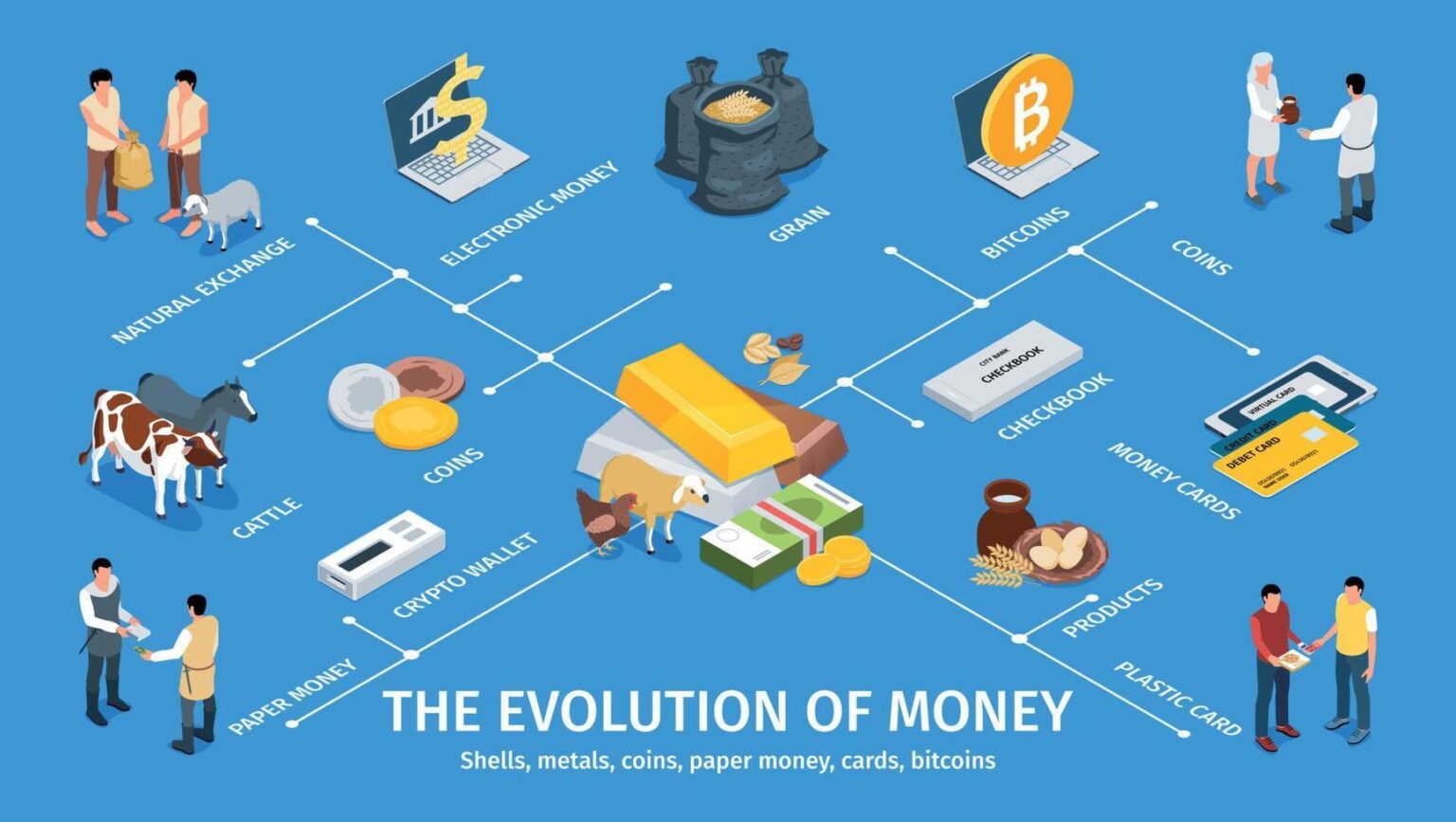
7. The Monetary Evolution in One Table
| Era | Dominant Money | Supply Control | Typical Lifespan of the Currency |
|---|---|---|---|
| Ancient – 1900 | Gold & silver coins | Cost of mining | Hundreds to thousands of years |
| 20th century | Gold-backed paper | Fixed exchange rate | 40–100 years |
| 1971 – today | Pure fiat (USD, EUR…) | Central-bank discretion | So far 54 years and counting |
| 2009 – present | Bitcoin | Algorithmic (21 M cap + halvings) | 16 years and increasing adoption |
Final Takeaway
Currency is whatever the government forces you to use for taxes and debts.
Money is what free people voluntarily choose to save and settle trades when they have a choice.
Throughout history, whenever a currency’s supply became unlimited, it eventually ceased functioning as money. Gold endured for millennia because no one could print it. Bitcoin is the first digital asset specifically engineered to be unprintable.
If your goal is to preserve wealth across years, decades, or generations, you must own assets whose supply cannot be inflated away.
Everything else is just currency — and currencies die.








No comments yet. Be the first to share your thoughts!